FeaturesThe Legend of Zelda: Ocarina of Time
Ocarina of Time is back: why a 1998 game still shapes 3D games
Ocarina of Time returns on Switch 2 on 5 November, so I went back through its story, from a Kyoto ninja show and Z-targeting to Navi and Koji Kondo's music.
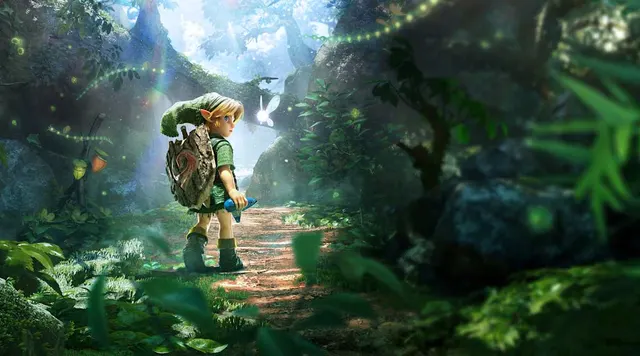
Some games you play, and some games end up teaching you how games are supposed to work. The Legend of Zelda: Ocarina of Time is one of the second kind. It came out here on the Nintendo 64 on 18 December 1998, and on Thursday 5 November it’s back as a Nintendo Switch 2 exclusive.
I was only a little kid when it first landed, so I won’t pretend I was queuing up on launch day.
This isn’t a quick touch-up, either. Nintendo says the new version was built from the ground up for Switch 2. So before it lands, I wanted to go back through the whole story: a sword-fighting Zelda, a hot day at a Kyoto film studio that changed 3D games, and one N64 cartridge that has kept coming back for nearly 28 years.
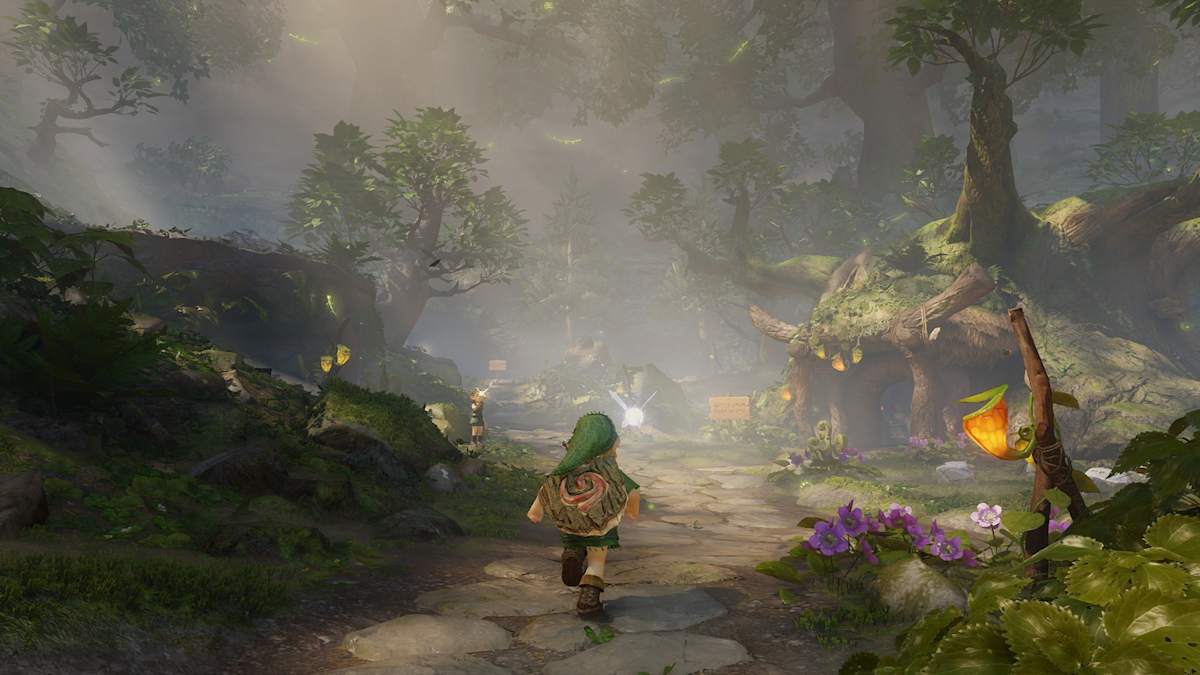
Kokiri Forest, rebuilt for Nintendo Switch 2. Image: Nintendo
1998: the sword-fighting Zelda
Ocarina of Time first came out in Japan on 21 November 1998 and reached Australia about four weeks later, on 18 December, just in time for Christmas. In between, the Classification Board rated it PG for low-level animated violence. It was the first Zelda game in 3D.
It was also late. Shigeru Miyamoto has said the plan was to have it ready for Christmas the year after the N64 launched, so it ended up almost a year behind, after about two and a half years of work. It was even meant for different hardware: the team started building it for the 64DD, a disk drive add-on for the N64. But disks were too slow to load Link’s animations on the fly, and there were about 500 of them, so it moved to a cartridge.
The idea at the heart of it was simple. Takao Shimizu, who went off to direct Star Fox 64, had made a chanbara (Japanese sword-fighting) demo and wanted a Zelda with that kind of action. Osawa, who wrote the script and ended up overseeing the game’s five directors, started writing with sword fights front of mind.
Miyamoto first suggested a first-person game where you’d only see Link when a fight started. Designer Yoshiaki Koizumi, who was building the Link model, says he never tried it once. In Nintendo’s Iwata Asks interviews, his reason is that Link is cool and he wanted to see him the whole time. Fair enough.
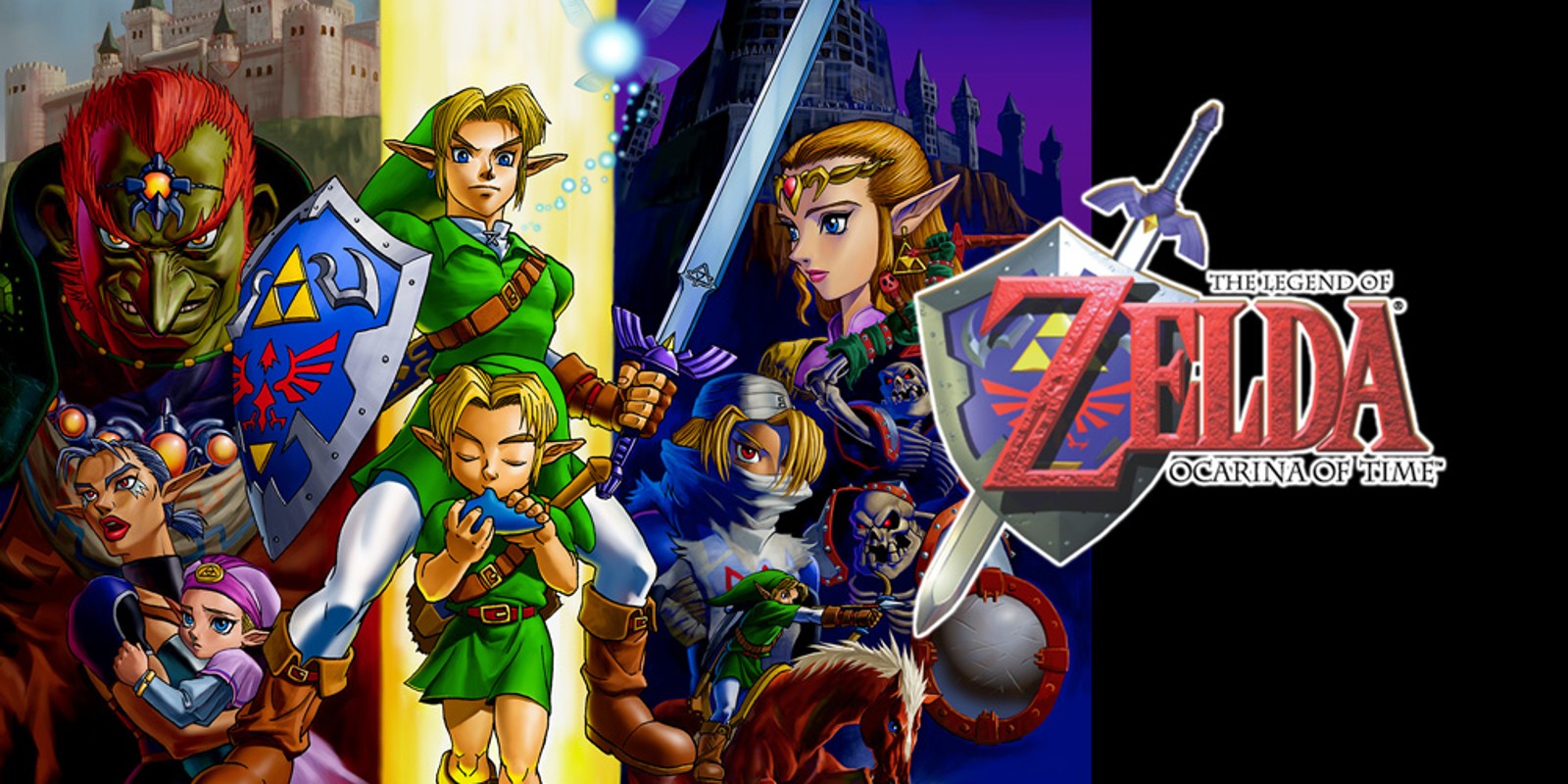
The original’s artwork, with both Links front and centre. Image: Nintendo
The day trip that gave us Z-targeting
Keeping Link on screen created problems a first-person game wouldn’t have had. In 3D it’s surprisingly hard to line yourself up with an enemy, or even a signpost. Osawa’s example is Super Mario 64, where trying to read a sign could leave you running around it in circles.
So one very hot summer day, Osawa, Koizumi and designer Jin Ikeda went to Toei Kyoto Studio Park, a film studio you can visit, full of period drama sets and shows. It was so hot that they ducked into a playhouse to cool off, and a ninja show happened to be on.
Koizumi spotted the trick that makes one hero beating twenty attackers look believable: they don’t all attack at once. One fights while the rest wait their turn. That’s Z-targeting. Press the Z Button and Link locks on to one enemy, the camera swings in behind him, and everyone else politely waits in line. Osawa took something different from the same show. He imagined an invisible chain between Link and his target, so you could circle around and look for an opening.

Locking on in the 1998 original. The yellow triangles mark your target. Image: Nintendo
Koizumi says the Forest Temple fight against two Stalfos skeletons only exists because of that visit. Even Navi came out of it. The first lock-on marker was a plain upside-down triangle, and Koizumi, being a designer, wanted something nicer. He made a little winged ball of light, called it the Fairy Navigation System and showed it to Osawa, who named her Navi on the spot. Because she navigates.
Once she had a name, Navi became a character. She changed colour depending on who you were facing, gave hints, and gave the story its opening: Link as the only Kokiri without a fairy. The fairies even solved a hardware problem. The N64 struggled to show lots of people at once, so Kokiri Forest shows the fairies, and their owners pop in when you get close.
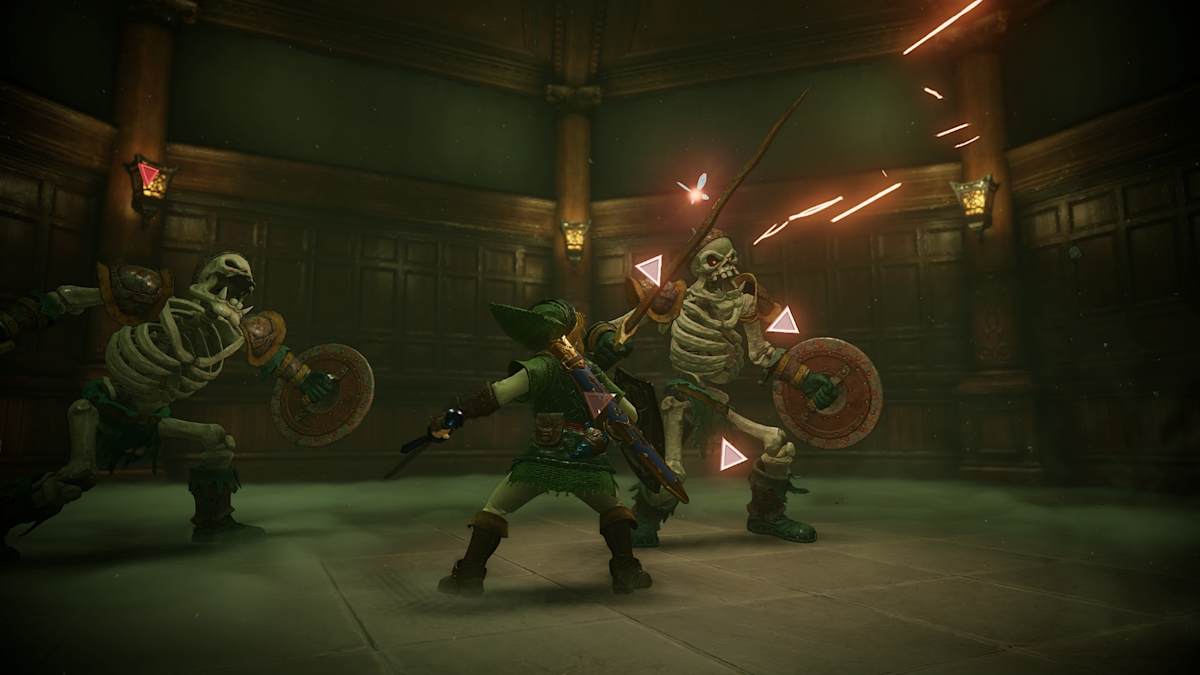
Two Stalfos at once, on Switch 2. The lock-on markers are still there. Image: Nintendo
One button that knows what you mean
The other big idea is so normal now that it’s easy to miss. Look at the blue icon at the top of the original’s screen. The original manual calls it the Action Icon, and it shows what the A Button will do right now. Stand next to a person and it says Speak. Stand next to a door and it says Open. In a fight, it says Attack. One button, whatever the moment needs.
Jumping got the same treatment. Early on, Link had a jump button, like Mario. Then Miyamoto thought up autojump on a day off and couldn’t wait for Monday to tell the team, the same people who had just made Super Mario 64. Run at a gap and Link leaps it himself. Satoru Iwata, Nintendo’s former president, later said Ocarina of Time showed people who had never played in 3D how to do it, and that autojump and Z-targeting were what impressed them.

The blue icon tells you what A will do. Here, it’s Attack. Image: Nintendo
Two Links, seven years apart
For a long time, there was no young Link at all. Osawa planned the game around adult Link, because a kid with a tiny sword would be at a real disadvantage against big enemies. Then, about a year and a half before release, Miyamoto and others said they wanted to see a cute little Link too.
Osawa’s answer was the time-travel twist that defines the game: draw the Master Sword from its pedestal and Link jumps seven years into the future, put it back and he’s a kid again. Koizumi’s answer to doubling his workload was a neat shortcut. He scaled down adult Link’s model and reused the same animations, then reworked them where he had to.
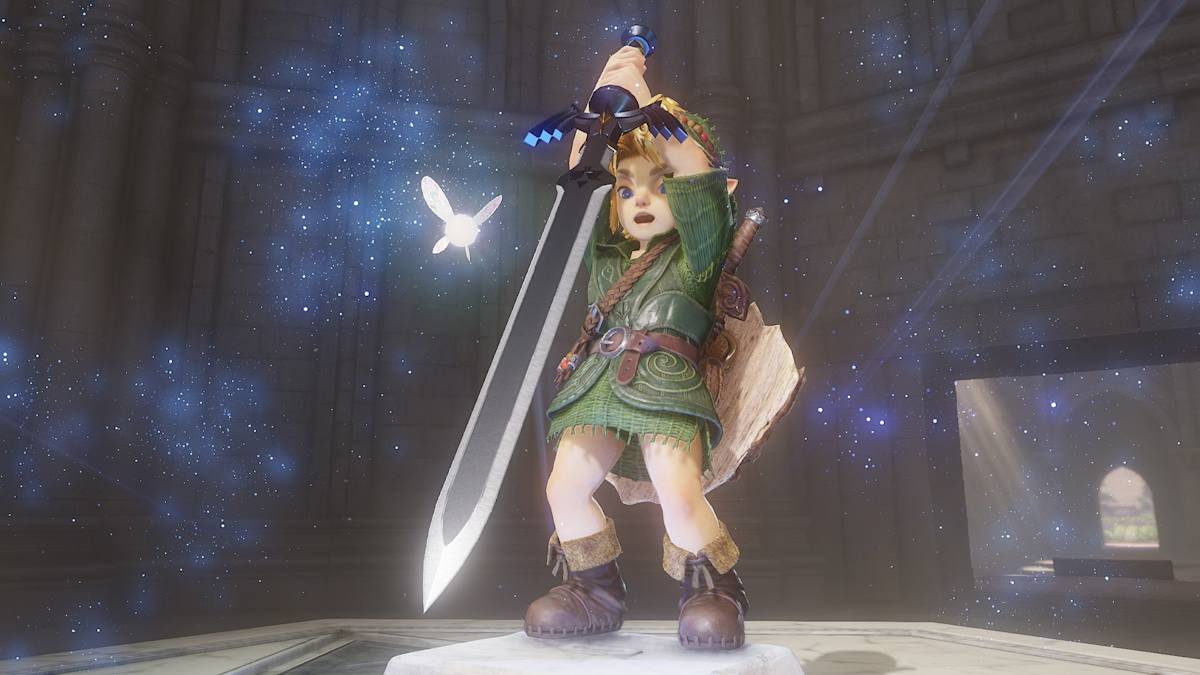
The Master Sword is your ticket seven years ahead. Image: Nintendo
The ocarina does the rest of the magic. Link learns 12 melodies from people around Hyrule, and on the N64 you played them with the A Button and the four C Buttons. The right song in the right place opens a door, gets you a hint or warps you somewhere else. Songs can even turn day into night, and Hyrule has its own day and night, with new faces and new enemies once the sun goes down.
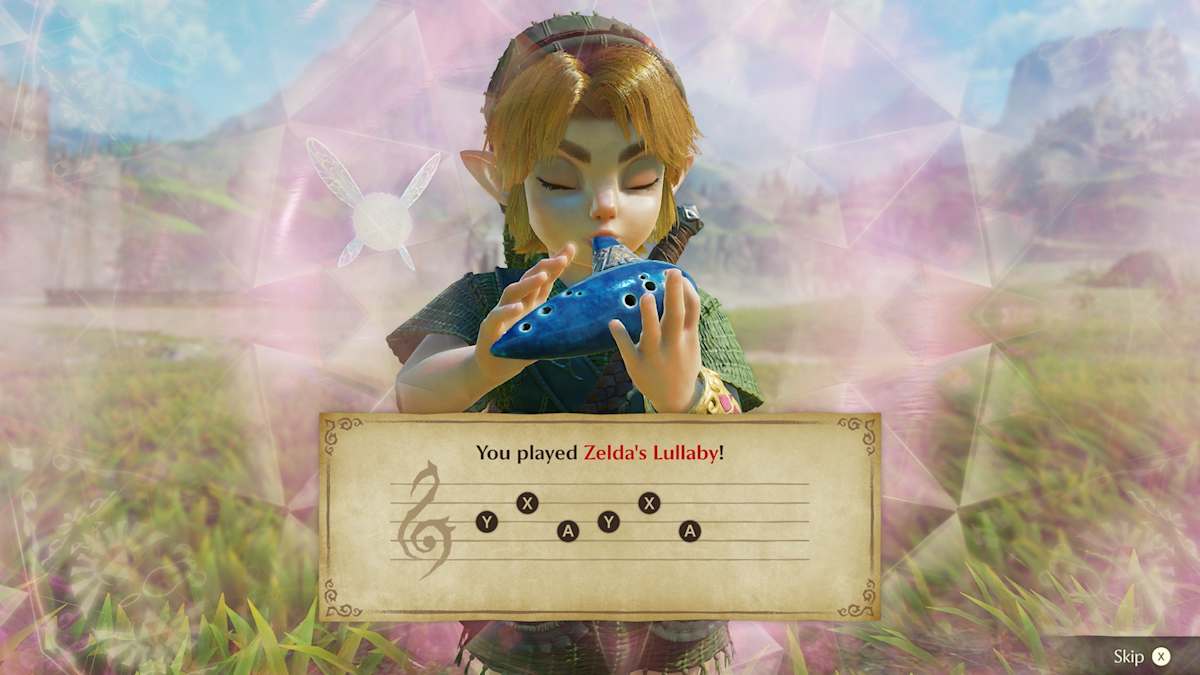
Zelda’s Lullaby, as it looks on Switch 2. Image: Nintendo
Koji Kondo’s music never plays the same way twice
Koji Kondo has written music for both the Zelda and Super Mario series since the very first games in the 1980s, and Ocarina of Time has some of his cleverest work. Hyrule Field was big enough that you were glad of a horse, and Kondo didn’t want you coming back from every dungeon to the same tune droning on. So he wrote about 20 short eight-bar pieces, each built to lead into any of the others, and the game shuffles them at random.
As an enemy gets closer, the music slides into battle mode, and when the fight’s over it eases back. Stand still and it goes quiet. Iwata explained that the N64’s cartridges let the music be put together on the fly, at a time when most games streamed a fixed track.
That mattered when the 3DS remake came along. Nintendo’s sound team started giving the soundtrack a more modern arrangement, and about halfway through, Kondo told them to stay faithful to the N64 sound, interactivity and all. In his words, “if you changed the sound like that, it wouldn’t be Ocarina of Time!” His own favourites aren’t the big themes, either. He picked the sneaky music for the Hyrule Castle courtyard, the Super Cucco minigame and the ending credits. Which is a very Kondo answer.
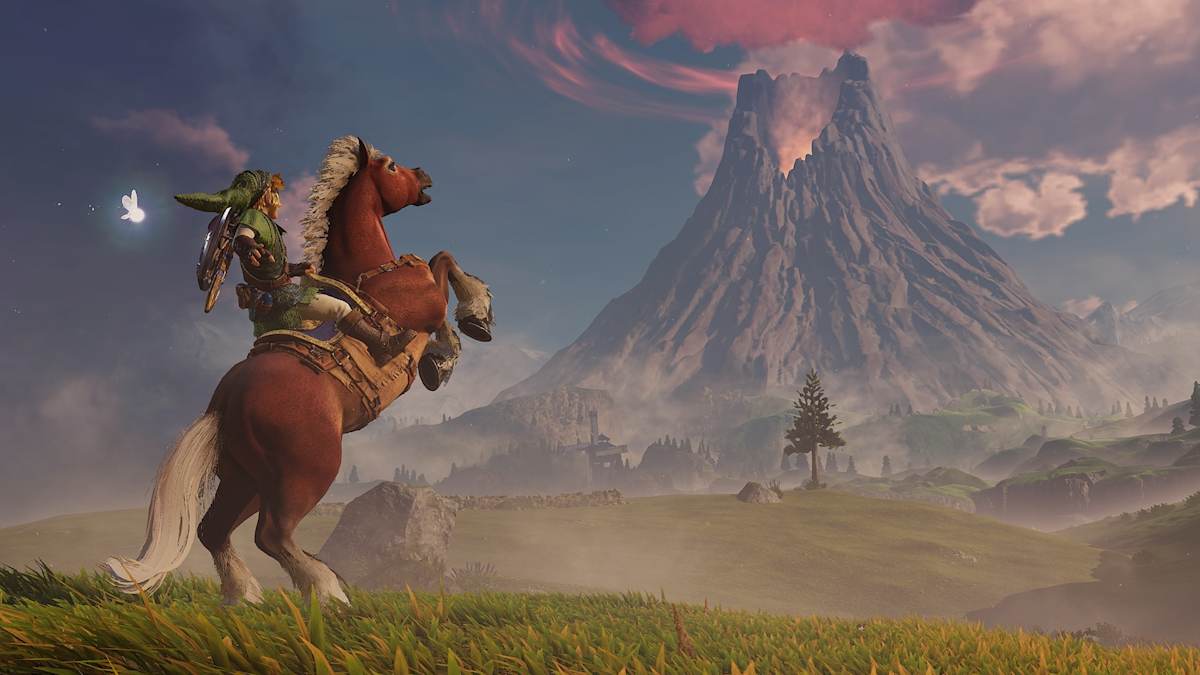
Hyrule Field on Switch 2, the place Kondo didn’t want to get boring. Image: Nintendo
Master Quest, Virtual Console and a 3DS remake
Nintendo hasn’t let Ocarina of Time sit still for long. Master Quest, a harder version with rearranged dungeons, was first made for the 64DD but never came out on it. It eventually turned up on a GameCube bonus disc for people who pre-ordered The Wind Waker.
That 64DD plan is also how Majora’s Mask happened. Eiji Aonuma was asked to remix Ocarina’s dungeons, found it much more fun to make new ones, and talked Miyamoto into letting him make a whole new game, as long as he did it in a year. It reached Australia in November 2000.
The original came to the Wii’s Virtual Console in 2007 and the Wii U’s in 2015. Then came the first proper remake.
Nintendo gave it to Grezzo, a Tokyo studio then run by Koichi Ishii, and Ocarina of Time 3D arrived here on 30 June 2011 with glasses-free 3D, gyro aiming and a touch-screen menu that finally made the Iron Boots quick to swap. Aonuma admitted he’d wanted to fix the Water Temple for 13 years. It also added Hint Movies for anyone stuck, a Boss Challenge mode and a mirrored Master Quest where Link takes double damage.

Ocarina of Time 3D, out here in June 2011. Image: Nintendo
These days, if you’ve got Nintendo Switch Online + Expansion Pack, the N64 original is part of the Nintendo 64 classics library, which arrived here on 26 October 2021. On Switch 2 you can even rewind if you fluff a jump.
Where it sits in the Zelda timeline
Ocarina of Time is also the hinge the whole Zelda story swings on. On Nintendo’s official timeline, only Skyward Sword, The Minish Cap and Four Swords come before it, and after it, history splits three ways.
In one branch, the hero falls in battle. That leads to A Link to the Past, Link’s Awakening and, much later, the original 1986 Legend of Zelda.
If he wins, time splits again. The child era leads to Majora’s Mask, Twilight Princess and Four Swords Adventures. In the adult era, Ganondorf is sealed away, then returns, and Hyrule is sealed and flooded, which is how you end up on the Great Sea in The Wind Waker, followed by Phantom Hourglass and Spirit Tracks. That’s a lot of history resting on one game.
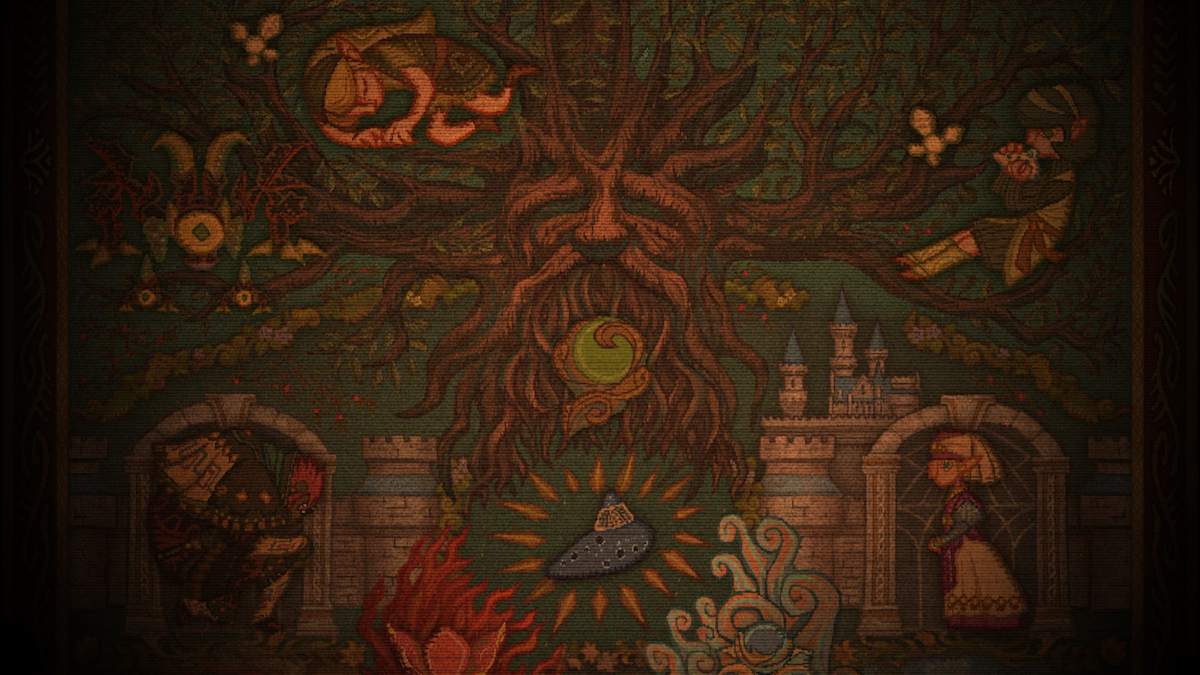
The whole story, woven into one picture for the new version. Image: Nintendo
What’s new on Switch 2
Nintendo revealed it in a Nintendo Direct in June, and series producer Eiji Aonuma showed the first gameplay and the release date at the Zelda 40th Anniversary Direct in September. It’s a full remake, and the list of changes is long. The visuals have been overhauled right down to the textures, loading is faster and it runs much more smoothly. Characters are fully voiced in longer cutscenes and have a lot more to say, and the music is now symphonic and orchestral.
You also get a dash, camera control on the right stick, and button commands for jumping and running freely. Yes, after all that, Link can jump when you tell him to. The day and night cycle now keeps going wherever you are, towns included. You can aim the slingshot and bow with motion controls or buttons, and Threads of Time shows your progress and next objective, with a big woven picture of your journey filling in as you go.
The headline trick is the ocarina. Hum one of Link’s songs near the Switch 2’s microphone, or play it on a real instrument, and he’ll play it in the game. There’s also a hall of statues of monsters you’ve beaten, where you can read up on them or fight them again, and ZELDA NOTES in the free Nintendo Switch App adds a daily quiz with more than 2,000 questions in total. Young Link and Young Zelda amiibo arrive in 2027 and unlock retro-looking masks, and the Zelda amiibo you already own give you extras.
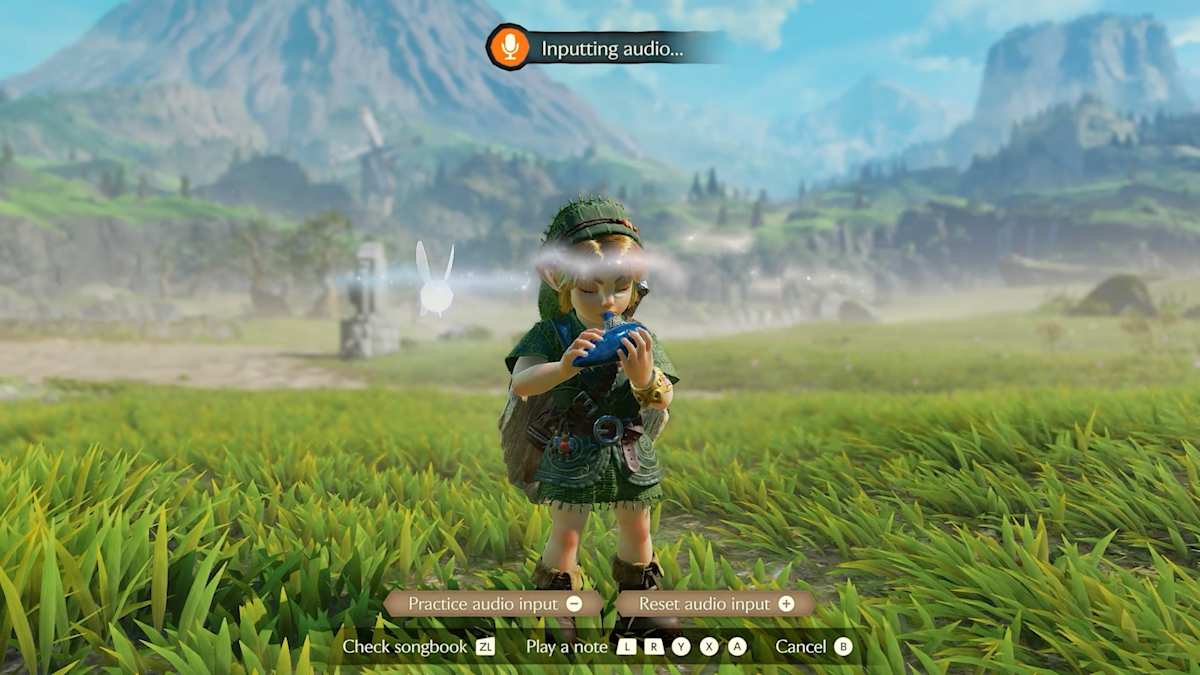
Hum a song and Link plays it. Image: Nintendo
It’s single player, rated PG for mild threat and violence, and $94.95 on the Australian eShop. Nintendo hasn’t announced what time it unlocks in Australia, and our Ocarina of Time page will show the time if it does. The first print run of the boxed version has textured foil cover art while stock lasts. It’s also part of the series’ 40th anniversary, which has a concert tour coming to Australia, starting in Melbourne next May.
Why it still matters
Plenty of old games are fondly remembered. Ocarina of Time is still built into the way 3D games work. Locking on to one enemy while the camera swings behind you, a button that changes with the situation, a hero who jumps gaps without you timing it: these were Nintendo’s answers to problems everyone making 3D games was wrestling with, and they stuck. If you’ve ever locked on to an enemy in a 3D game, you’ve used something a lot like an idea that started with a ninja show in Kyoto.
It’s also full of little touches that make the world feel alive. Miyamoto suggested that your sword should be able to slice signs. Kazuaki Morita, a programmer at Nintendo’s partner studio SRD, made the pieces float if they landed in water, and when Miyamoto saw it, he burst out laughing and said, “Now that’s The Legend of Zelda!” Then someone realised you can’t read a sign you’ve chopped up, so playing Zelda’s Lullaby fixes it.
People noticed. At the Interactive Achievement Awards in 1999, it won in six categories, including Game of the Year. Miyamoto felt they’d captured something like the warmth, smell and humidity of a place. Iwata even admitted he was a bit envious of anyone getting to play it for the first time.
That’s the best thing about this release. A whole lot of people are about to meet Navi for the first time, and the rest of us get to go back to Kokiri Forest with a fresh pair of eyes. I’ll be the one humming Zelda’s Lullaby at my Switch 2.
The Legend of Zelda: Ocarina of Time (Nintendo Switch 2)
Switch 2
- Nintendo Switch 2, Day One Edition.
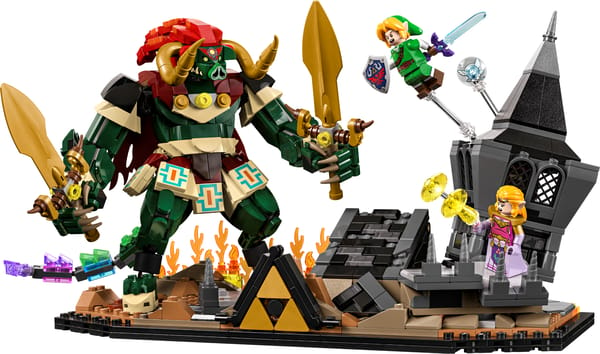
LEGO The Legend of Zelda: Ocarina of Time – The Final Battle (77093)
- Set 77093
- 1,003 pieces
- Ages 18+

