FeaturesNintendo Switch Sports ResortNintendo Switch Sports
From NES Tennis to Wuhu Island: how Nintendo's sports series got to Switch Sports Resort
I was 12 when Wii Sports came out. Now Switch Sports Resort is back on Wuhu Island, so here's how Nintendo got from NES Tennis to here.

I was 12 when Wii Sports came out, and I’m not sure any game has grabbed me in quite the same way since. There was nothing to learn. Someone handed you the remote, told you to swing it like a racket, and you were away. It was the game that got parents and grandparents playing, usually at full volume.
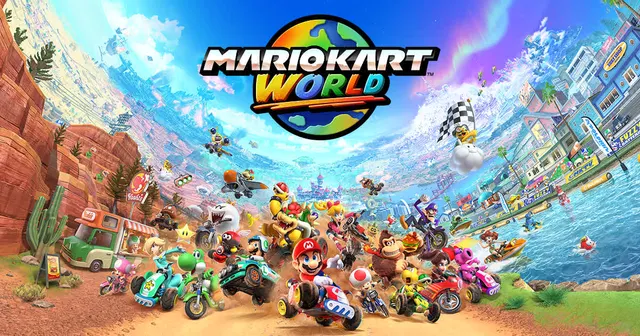
So when Nintendo Switch Sports Resort landed on Switch 2 on 22 October and opened by dropping everyone back on Wuhu Island, I got excited. Properly excited. Wuhu is the holiday island from 2009’s Wii Sports Resort, volcano and all, and the new game fills it with 12 sports, from archery and table tennis to thumb wrestling, played with Joy-Con 2 controllers that double as bows, rackets and handlebars.
It got me wondering how Nintendo actually got here. The series officially starts with Wii Sports in 2006, but the idea behind it is older than that, and every game since has borrowed something from the one before. Going back through it all explained a lot about why 12-year-old me was so hooked.
Before the Wii: Baseball, Tennis and Golf
The story really starts on the Famicom, the Japanese version of the NES. Nintendo released Baseball there in December 1983, then Tennis in January 1984 and Golf that May. They’re tiny games by today’s standards. There are no licences, no real players and no stats to study, just a court or a course, a ball and rules you already know. Squint a bit and that’s the Wii Sports pitch, more than twenty years early. If you’re curious, all three are still in the NES library on Nintendo Switch Online.

Tennis on the NES, first released on the Famicom in 1984. Image: Nintendo
Golf comes with my favourite bit of trivia from all of this. Satoru Iwata, who went on to become Nintendo’s president and steer it through the Wii years, said he was the only programmer on it. When Wii Sports came along, its golf rebuilt nine of that game’s 18 holes in 3D. So every round of Wii Sports golf was played on holes Nintendo’s future president had programmed himself back in 1984.
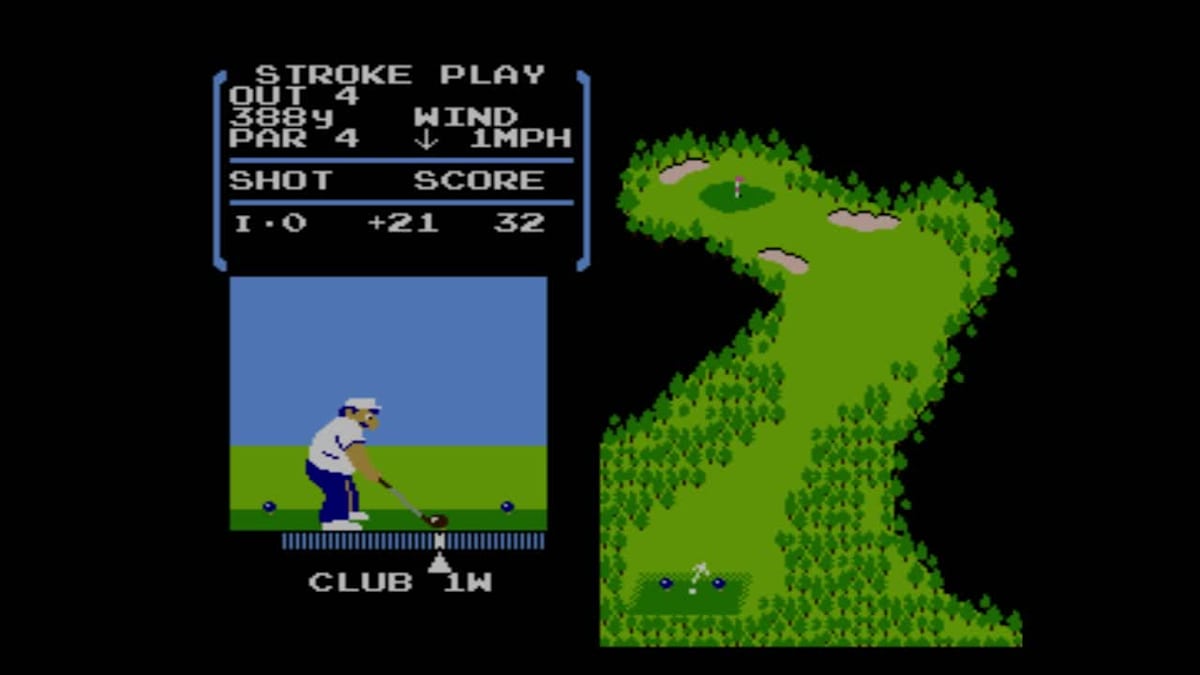
Golf on the NES. Wii Sports rebuilt nine of its holes. Image: Nintendo
Nintendo was playing with motion long before the Wii, too, mostly on handhelds. Kirby Tilt ‘n’ Tumble on Game Boy Color hid a motion sensor in the cartridge, so you steered Kirby by tilting the whole console. WarioWare: Twisted! on Game Boy Advance put a gyro sensor in the cartridge, and you played it by turning the handheld around in your hands.
Just as important was a change in who Nintendo was making games for. On DS, it grouped games like Nintendogs and Brain Training under a Touch! Generations label, meant for kids, parents and grandparents no matter how much they’d played before. By 2007, Iwata was telling investors that the Wii was riding a wave of new players the DS had kicked off in Japan. The Wii’s job was to bring that crowd into the lounge room.
2006: Wii Sports, and a controller called a remote
At 12 I had no idea, but Wii Sports wasn’t planned as a sports game at all. Producer Katsuya Eguchi says it grew out of little test programs Nintendo made while it was still designing the Wii Remote. The Remote’s long, rod-like shape suggested tennis almost straight away, and baseball got made because nobody else had picked it.
The name was deliberate, too. Iwata insisted on calling it a “remote”, because one of the big questions behind the Wii was why people pick up the TV remote without a second thought but hesitate when they’re handed a game controller. In Nintendo’s Iwata Asks interviews he put it simply: “The TV remote in your house is something that always sits within reach”. That’s really the whole trick. Nobody was scared of it.

The Wii and its remote. Image: Nintendo
At E3 2006, Nintendo only showed tennis, golf and baseball. The trouble was that baseball isn’t a big deal in Europe, so the team went hunting for a sport almost everyone in the world has tried, including mums who barely play sport at all. That’s how bowling made it in, which is lucky, because bowling is the one everybody seems to remember. Boxing, with the Remote in one hand and the Nunchuk in the other, got in as well, even though only one of those two was meant to.
The people they tested it on tell you exactly who it was for. Keizo Ota, who directed tennis, tried it on his wife, who never plays games, and his preschool daughter. And people who’d played the real sport tended to beat seasoned gamers. Eguchi’s example is a dad who plays baseball beating his gamer son, so if a parent ever smashed you at Wii Sports baseball, now you know why.
The Miis came from the same place. The team wanted families to see themselves in the game, and found that plain, wooden-doll test figures made people feel like they were the ones playing, while putting Mario in made it feel like Mario was. That became the Mii Channel, after earlier tries at make-your-own characters, like Mario Artist: Talent Studio on the Nintendo 64DD, hadn’t gone anywhere. Making Miis of everyone you knew was half the fun anyway.

Wii Sports: five sports, all played by Miis. Image: Nintendo
Outside Japan, Wii Sports came in the box with the console. Counting all those bundled copies, Nintendo puts it at 82.90 million, which makes it the biggest game on the Wii by a mile.
2009: Wii Sports Resort, Wii MotionPlus and an island
Three years later Nintendo went bigger, and it needed better hardware to do it. The original Remote could feel you moving it in straight lines but couldn’t tell when you twisted it, which is why golf couldn’t tell a hook from a slice. Wii MotionPlus fixed that. It was a little add-on that clipped onto the bottom of the Remote with a gyro sensor inside, and it finally let games read angles and rotation. Nintendo had actually thought about putting a gyro in the original Remote, but dropped it for space and cost. Wii Sports Resort and MotionPlus were developed together, and the game came with one in the box.

Wii MotionPlus, the add-on that made Resort possible. Image: Nintendo
Swordplay is where you felt it straight away, because your Mii’s sword followed the angle of your hand. It almost didn’t happen. The gyro kept drifting, pulling the on-screen sword out of line with your real one, and for a while the team’s fallback was a duel where each player got a single swing. Then Ota found a fix. A one-swing Swordplay would have been a very different game.
Resort also gave the series somewhere to live. Shigeru Miyamoto had spent more than ten years chasing what he called an “island concept”, the idea that a place could be a character in its own right. The team tried it first with the island in Wii Fit, then turned it into Wuhu Island, a resort built big enough, with landmarks and a volcano in the middle, that other games could come back to it. Pilotwings Resort on 3DS did exactly that. And it worked. Wuhu feels like somewhere you’ve actually been. You know where the volcano is. You know the red bridge.
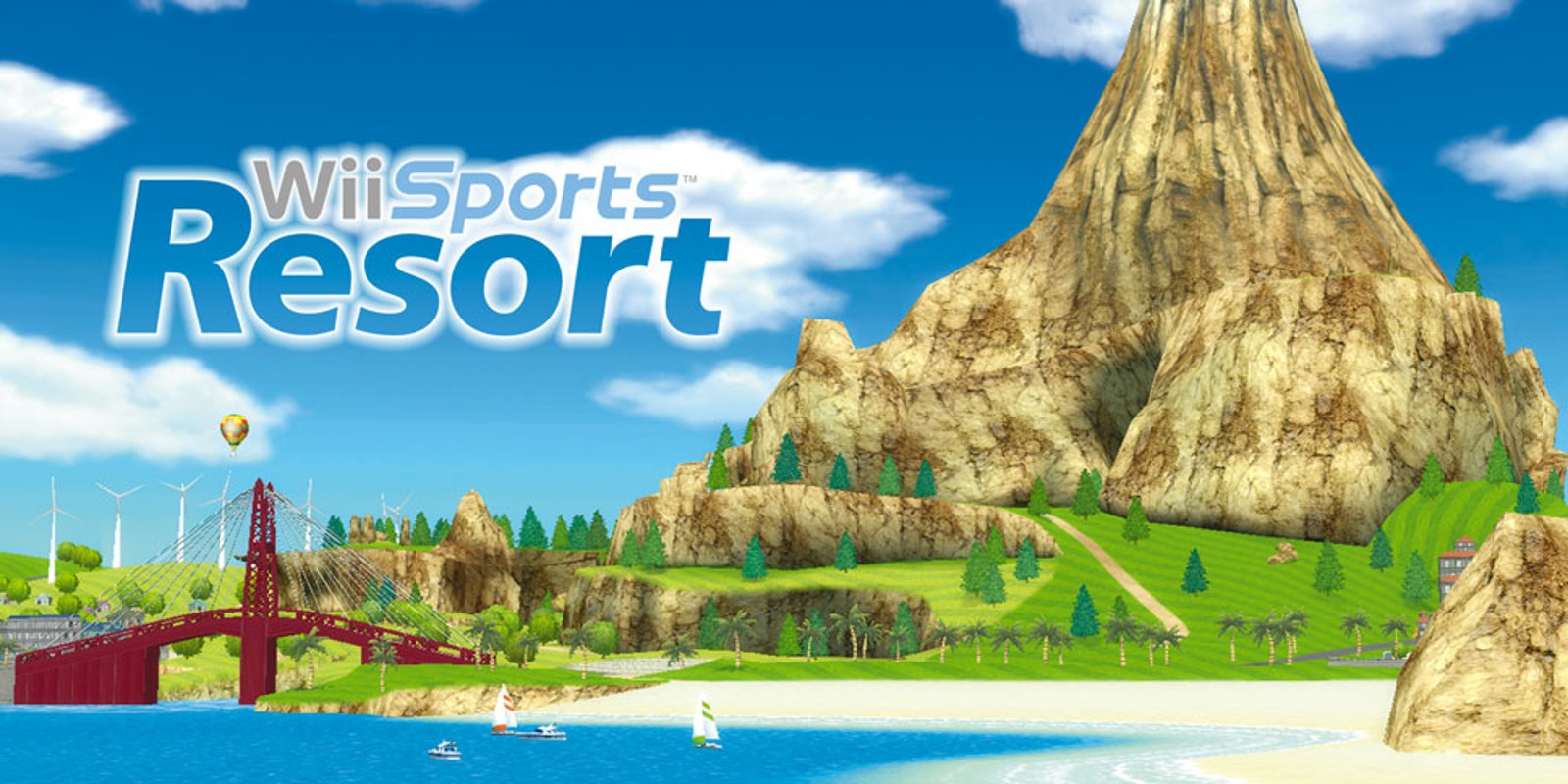
Wuhu Island as it looked in 2009. Image: Nintendo
Even the name changed along the way. “Wii Sports 2” was on the table until Nintendo of America suggested “Wii Sports Resort”. Miyamoto had “Resort” made big in the logo, and the team realised it was making a holiday rather than a sequel, which is why it mixes sports with things you do just for fun. Table tennis replaced tennis, partly to avoid repeating sports and partly because MotionPlus is so good at quick rallies. You also got to fly a little plane, holding the Remote like a toy, something Miyamoto had wanted to do since Pilotwings in 1990. Cruising around Wuhu with nowhere to be might still be the most relaxing thing the series has ever done.
There were 12 sports in total: Swordplay, Wakeboarding, Frisbee, Archery, Basketball, Table Tennis, Golf, Bowling, Power Cruising, Canoeing, Cycling and Air Sports. Nintendo has sold 33.14 million copies.
2013: Wii Sports Club takes it online
The Wii U got a remake rather than a new game. Wii Sports Club rebuilt the original five sports in HD for the Wii Remote Plus, which has the MotionPlus gyro built in, and added online play. Nintendo sold it one sport at a time on the eShop, starting with tennis and bowling in November 2013, and all five came out together on disc in July 2014.

Tennis training in Wii Sports Club. Image: Nintendo
There were some nice Wii U touches, like golf putting the ball on the GamePad at your feet. Mostly, though, it kept the series ticking over until the next console came along.
2022: Switch Sports moves to Spocco Square
The Switch’s Joy-Con have motion sensors built in, so this time nobody needed an add-on. Nintendo Switch Sports came out on 29 April 2022, and plenty of the team had been here before. Producer Takayuki Shimamura had been a director on Wii Sports, Wii Sports Resort and Wii Sports Club, and director Yoshikazu Yamashita had worked on both Wii games.
Getting it right took a restart. In Nintendo’s Ask the Developer interview, the team says its early prototypes got too complicated and lost what made the series fun, so they went back to basics. The new goal was the most approachable motion game they could make, for players aged roughly 5 to 95. Which is pretty much the Wii Sports brief all over again.
This one moved to Spocco Square, a made-up sports complex in a renovated warehouse district of a port town, and launched with six sports: soccer, volleyball, bowling, tennis, badminton and chambara, a sword-fighting game. Tennis, bowling and chambara carried over from earlier games, and the boxed version came with a leg strap so you could actually kick the ball in soccer.
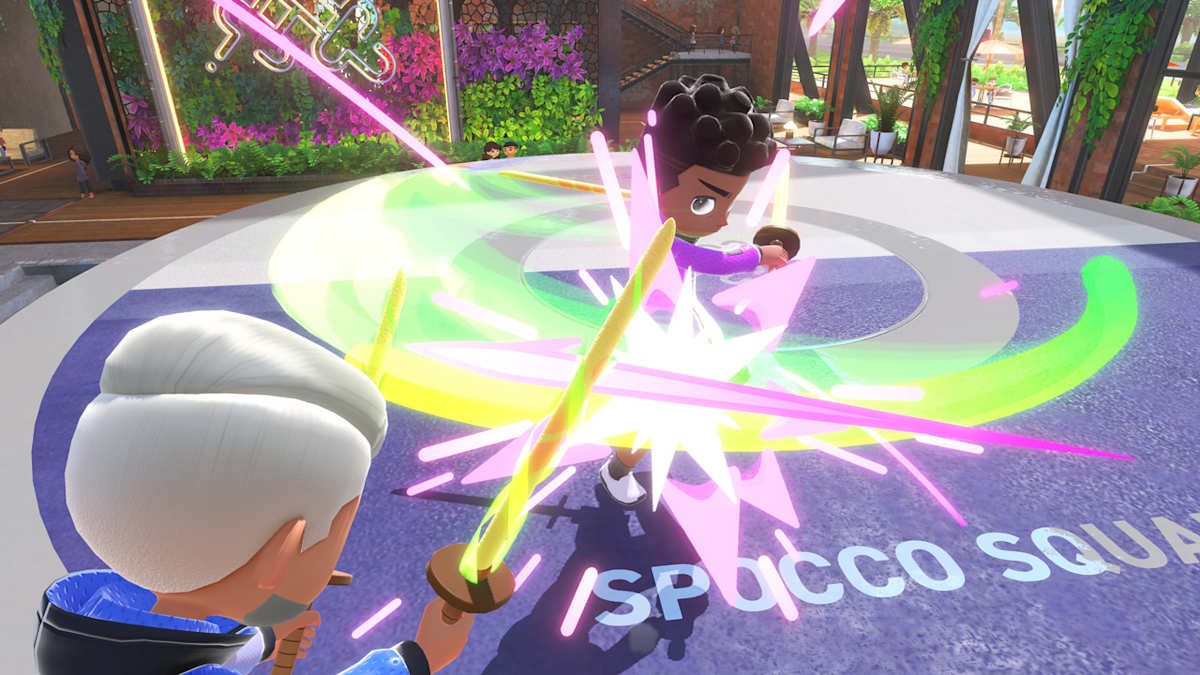
Chambara in Spocco Square. Image: Nintendo
Miis were still there, now alongside new characters called Sportsmates. It’s a bigger jump than it looks: Wii Sports’ Miis had about 30 animations, and the Sportsmates needed more than 650. Online play meant you could take on people around the world, with a Pro League ranking in every sport.
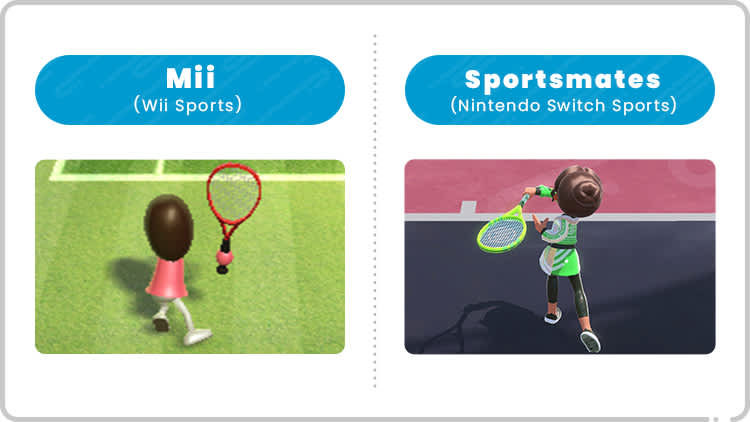
A Wii Sports Mii next to a Switch Sports Sportsmate. Image: Nintendo
Nintendo kept adding to it after launch. Golf arrived in a free update in November 2022 with 21 holes from the Wii Sports series, and basketball followed in July 2024. By the end of March 2026 it had sold 18.32 million copies. For all that, though, it never had Wuhu.
2026: Back to Wuhu
Which brings us to now. Nintendo Switch Sports Resort takes the series back to the island, and the name even ties the two eras together: on Wuhu, the resort is now called Spocco Resort. There are 12 sports. Boxing, table tennis, archery, tennis, volleyball, bowling, basketball, golf and thumb wrestling are the competitive ones, while skateboarding, power cruising and prop plane are leisure sports for exploring. There’s jump rope too, for warming up.
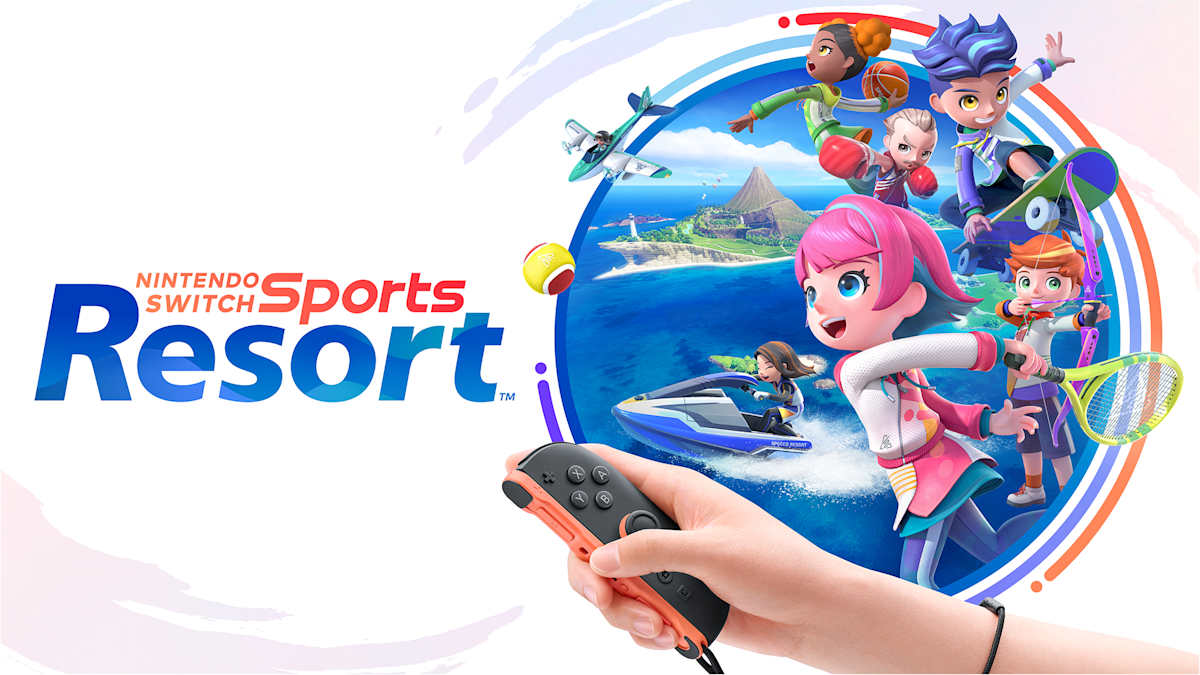
Nintendo Switch Sports Resort. Image: Nintendo
Only two of them are new. In thumb wrestling you win by pinning your opponent’s thumb for three seconds, which is such a Nintendo idea for a motion-controls game. Skateboarding uses the Joy-Con 2’s mouse controls to grind rails and pull tricks.
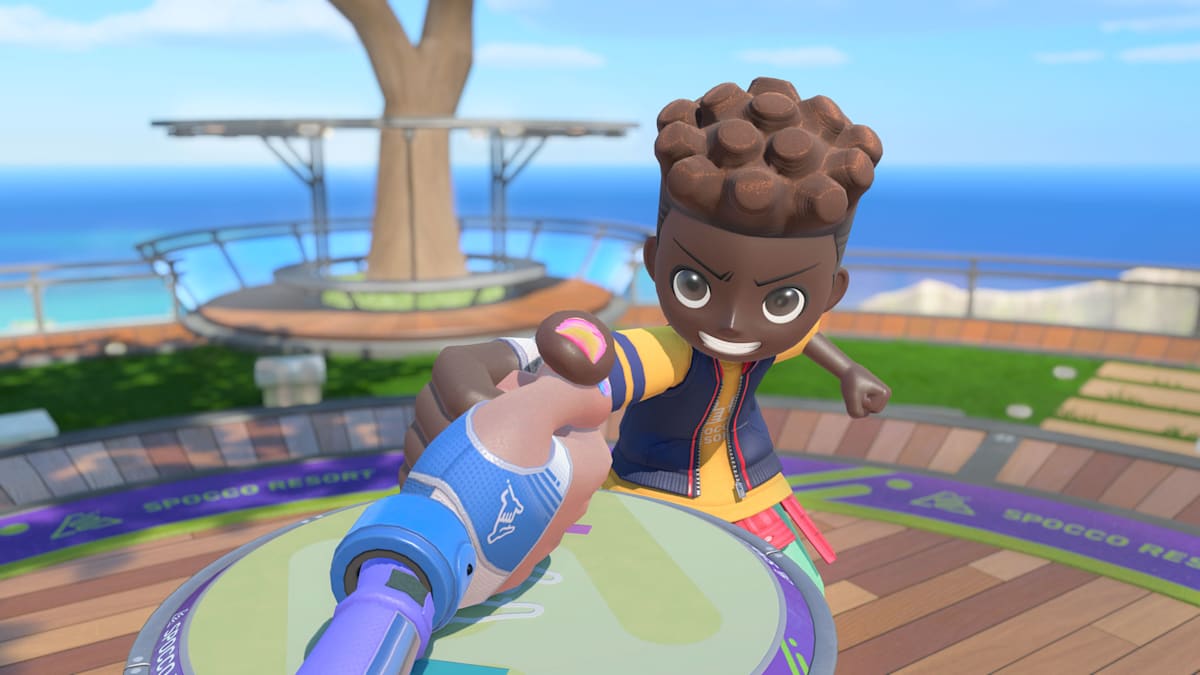
Thumb wrestling, one of the two new sports. Image: Nintendo
Everything else is a greatest-hits collection. Tennis, bowling, golf and boxing go back to the original Wii Sports. Archery, table tennis, basketball and power cruising first turned up in Wii Sports Resort, along with the plane, and volleyball came from Switch Sports. If one picture sums up the game for Wii Sports Resort fans, it’s power cruising with that volcano sitting in the background.
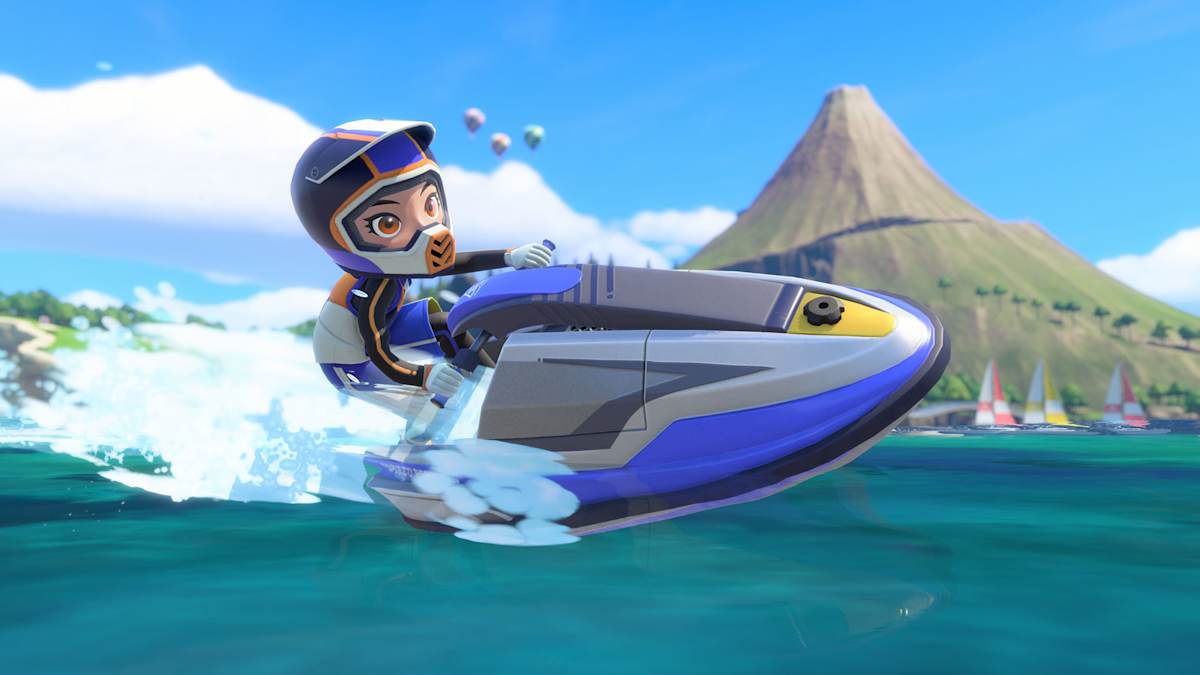
Power cruising is back, volcano and all. Image: Nintendo
The controls do things the Wii could only hint at. You twist the controller to put spin on a bowling ball, tilt it to fly the plane, and steer the boat in power cruising with a pair of Joy-Con, twisting for a boost. Original Switch Joy-Con work for every sport except skateboarding, so if you’ve got older controllers lying around, the whole family can still join in.
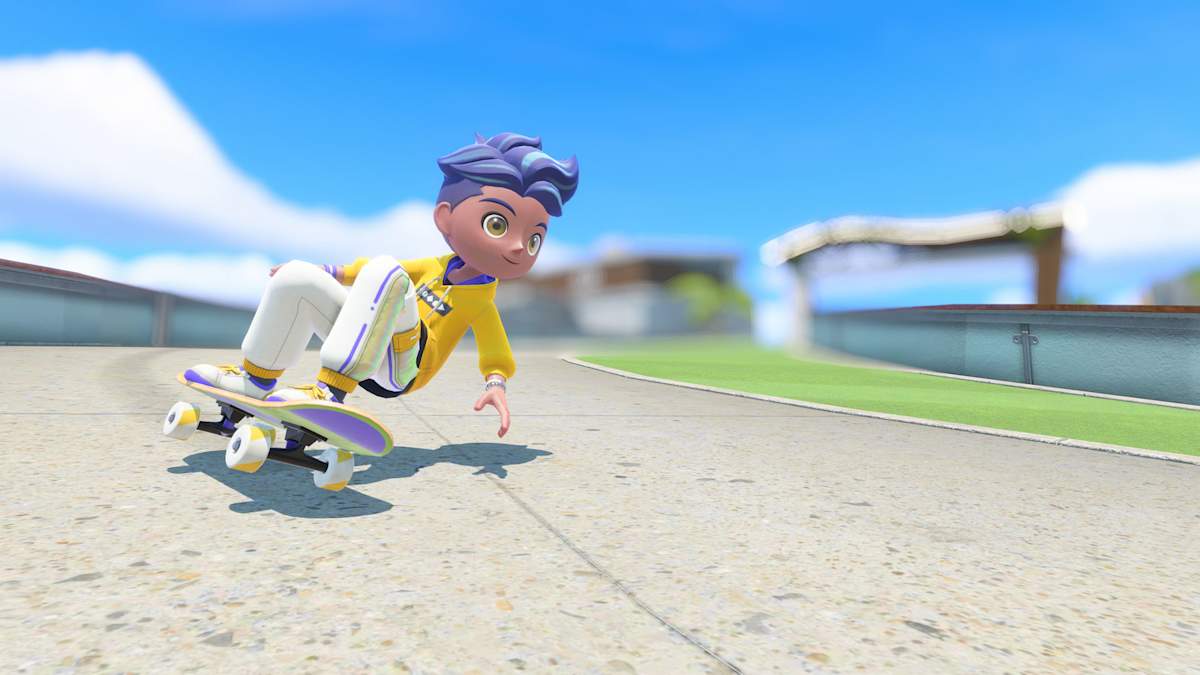
Skateboarding is the one sport that needs Joy-Con 2. Image: Nintendo
There’s more to do on your own this time, too. Island Crown has you taking on Wuhu’s champions across nine sports, and long-time players might recognise a Mii called Matt among them. You can explore the island at three times of day, and online there’s a Pro League, casual matches in nine sports and a friend lobby for up to eight players. Up to four people can play on one Switch 2 in TV or tabletop mode, but not in handheld. It’s $84.95 on the Australian eShop.
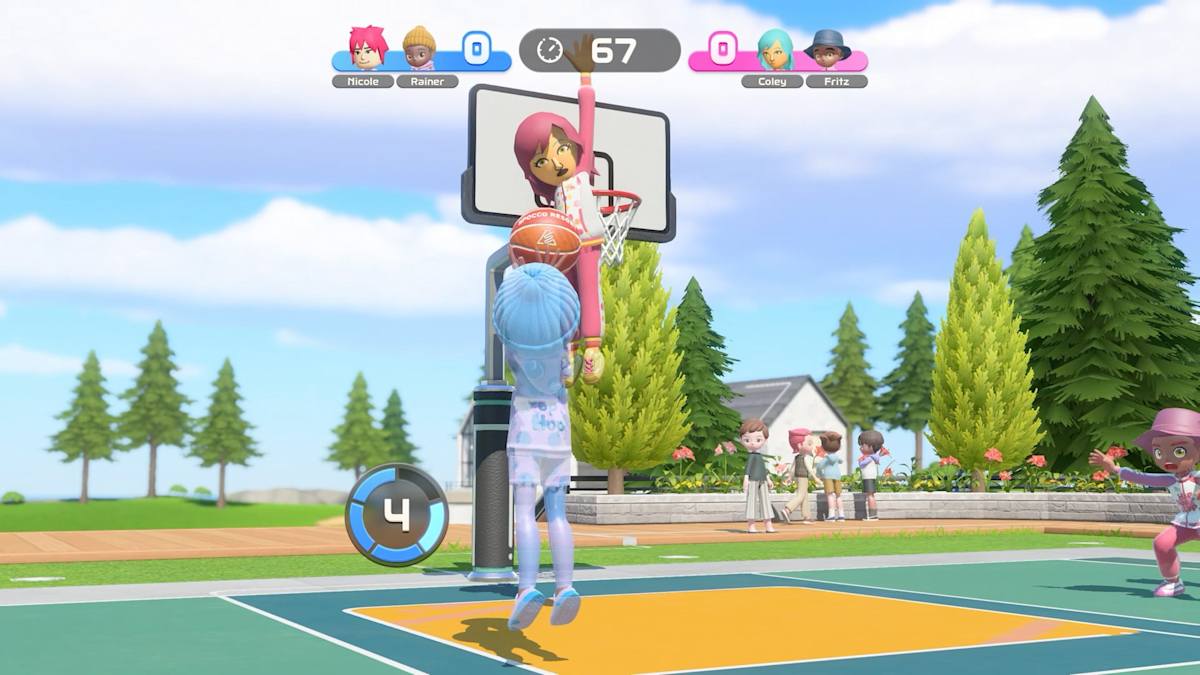
Miis are still part of the team. Image: Nintendo
Why it keeps working
Twenty years on, the basic idea has barely changed, and I think that’s exactly why it still works.
The controller teaches you. Every game in the series has shown off a new way to hold a controller: the Wii Remote, Wii MotionPlus, the Joy-Con, and now the Joy-Con 2’s mouse controls. Wii Sports literally grew out of the Remote’s test programs, and Resort was built alongside MotionPlus. Sports are the easiest way to show what new hardware can do, because you already know what a tennis swing is supposed to feel like.
Nobody needs the rules explained. The original team picked sports most people in the world have played and tested them on people who’d never touched a game. That’s how someone who bowls on the weekend ends up beating someone who games every day.
It’s made for the room, not just the screen. Miyamoto’s one-page plan for Wii Sports put the Wii at the centre of the family lounge room, and Iwata reckoned new players had the hang of it within about five seconds. That’s what made it a party game and not a tech demo. It’s also why so many Wii Sports memories are really memories of the people you played with.
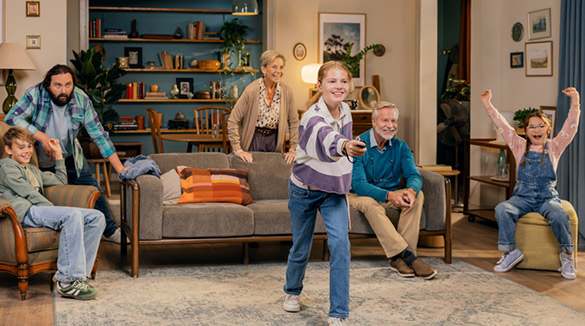
Nintendo’s pitch hasn’t changed: the whole family, one lounge room. Image: Nintendo
Simple on top, deep underneath. The game reads the angle of your wrist on every swing, and Wii Sports’ tennis director reckoned that made it close to impossible to hit the same shot twice. Bowling has no luck in it at all: the same throw always gets the same result. Under those easy first five minutes there’s spin, curve and timing for anyone who sticks around.
There’s a place to come back to. Wuhu Island was built from day one to outlast a single game. It’s hosted Wii Sports Resort, Wii Fit Plus and Pilotwings Resort, and seventeen years after Wii Sports Resort, it’s open for another season.
What the reviews say
The good news is that this isn’t just nostalgia talking. Switch Sports Resort sits at 79 on Metacritic from more than 70 critics. Nintendo Life gave it 9/10 and reckons it might be the series at its best, and GameSpot also went 9/10, calling it the best entry in the series. IGN was cooler at 7/10, but the overall verdict is pretty clear: Nintendo has done more than give the old island a new coat of paint.
As for me, I’m 12 again. See you on Wuhu.
Nintendo Switch Sports Resort (Nintendo Switch 2)
Switch 2
- Nintendo Switch 2. 12 motion-controlled sports on Wuhu Island, for up to four players on one console.