Halo and the original Xbox at 25: how a launch game made console LAN parties a thing
The original Xbox and Halo turn 25 on 15 November. Here's how one launch game, a network port and a lot of heavy TVs made console LAN parties a thing.
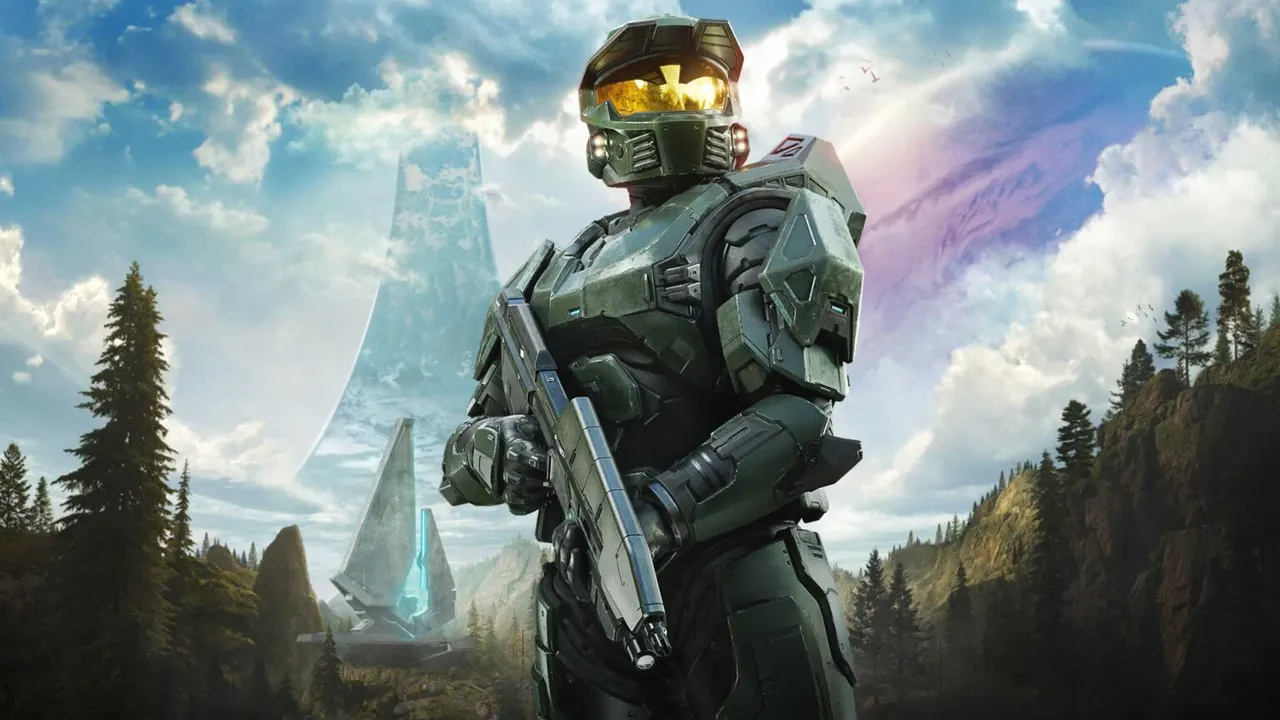
I run a LAN party here in Australia, so I think about network cables a lot more than most people. Twenty-five years ago, network cables meant almost nothing to console players. Then Microsoft built a network port into its first console, Bungie made Halo, and lounge rooms everywhere started filling up with TVs.
The original Xbox and Halo: Combat Evolved both turn 25 on 15 November. They launched together in North America in 2001, when I was about seven, and reached Australia a few months later. Nobody could have guessed back then that a launch game would help invent the kind of weekend I now organise.
So for the anniversary, I wanted to go back through how it all happened: Microsoft betting on a console, the studio it bought to make its big launch game, the four-TV setups, Xbox Live, and where Halo has landed in 2026.
2000: Microsoft builds a console
Bill Gates announced the Xbox at the Game Developers Conference in San Jose on 10 March 2000. Microsoft’s pitch leaned on what it already knew from PCs: an Intel Pentium III processor, a custom graphics chip co-developed with NVIDIA, and the DirectX tools developers were already using. The spec sheet that came with the announcement listed an 8GB hard drive, four controller ports and built-in Ethernet, and Microsoft said it was aiming to launch in 2001.
Most of that sounds ordinary now. In 2000, a hard drive and a network port inside a games console was a big call, and that network port is the one this whole story hangs on.
Buying Bungie
Microsoft needed games, so it went shopping. On 19 June 2000 it announced it had bought Bungie Software, a Chicago studio founded in 1991 and known for the Marathon and Myth series. The press release singled out one game Bungie was still making: Halo.
Bungie became an independent studio inside Microsoft’s games division, and Microsoft said it expected the team to play a key role in making games for Xbox. Take-Two, which had been distributing Bungie’s games, sold its 19.9 per cent stake in the studio to Microsoft and kept the rights to Myth and Oni. Halo stayed with Bungie, and Bungie now belonged to the company building the Xbox.
November 2001: Xbox and Halo arrive
The Xbox went on sale in North America on 15 November 2001 for US$299. The night before, Microsoft had 1,000 consoles waiting at Toys “R” Us in Times Square for a midnight launch, with Bill Gates on hand to greet the first person in the queue.

Bill Gates with the original Xbox and its Duke controller in Times Square. Image: Microsoft
Halo was one of five games Microsoft put front and centre that day, alongside Project Gotham Racing, Dead or Alive 3, Oddworld: Munch’s Oddysee and NFL Fever 2002. Nineteen games were out in launch week. By April 2002, Microsoft said Halo alone had sold more than a million copies worldwide, and that it got there faster than any other game on the new generation of consoles.
If you’ve only played Halo through a remaster, it’s worth seeing how it looked back then. Xbox put the original side by side with the remake when it was announced last year, and honestly, the old version holds up better than you might expect.
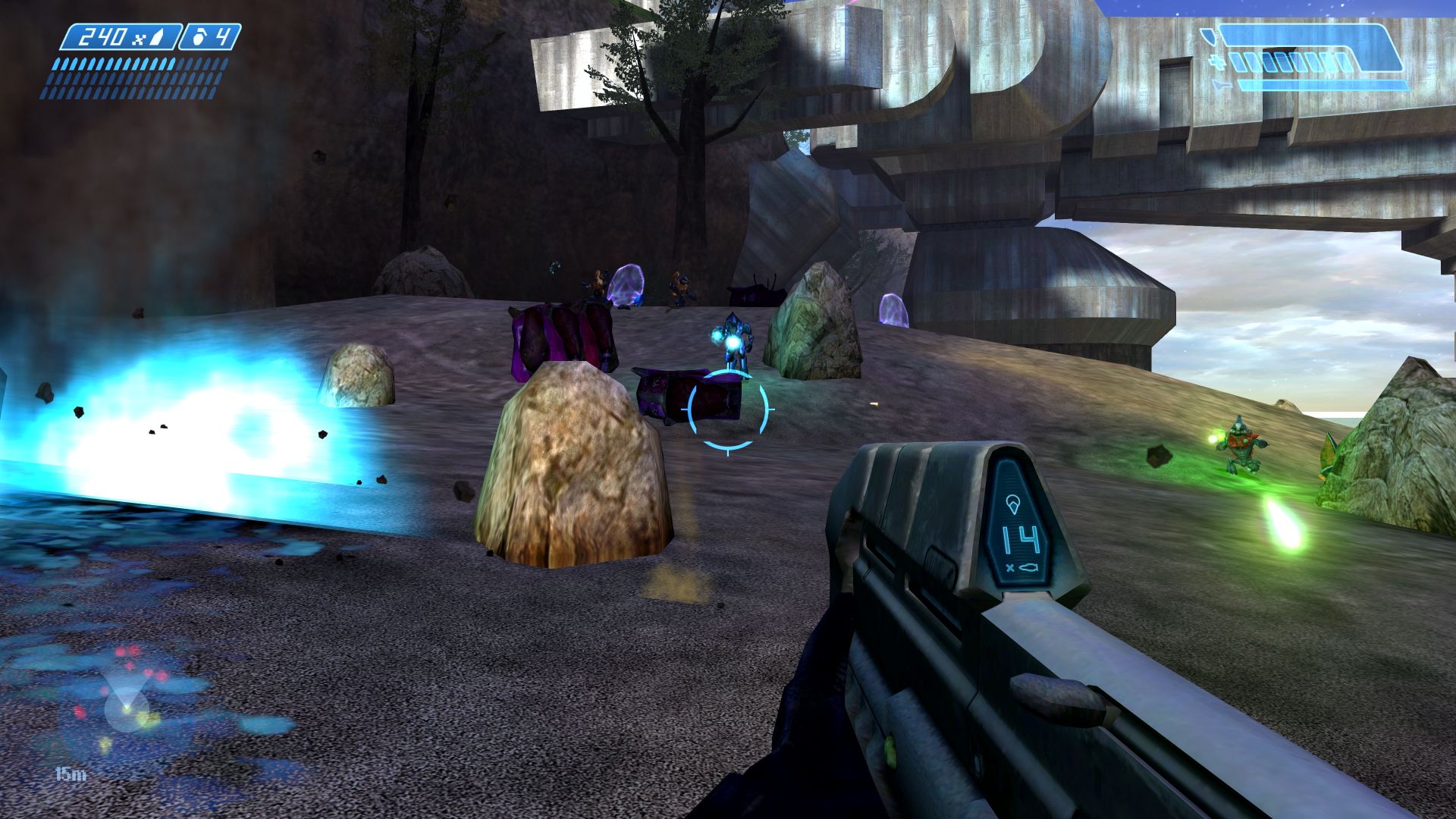
Halo: Combat Evolved’s original look, from Xbox’s side-by-side comparison with the 2026 remake. Image: Xbox
March 2002: Xbox lands in Australia
We waited four months. Xbox launched in Australia and 16 European countries on 14 March 2002, with midnight launch events in London, Milan, Spain and Melbourne. Microsoft put the price here at an estimated $649 including GST, in more than 700 Australian stores, and Halo was part of the launch line-up with Project Gotham Racing, Dead or Alive 3 and Jet Set Radio Future. Twenty games were on sale on day one.
Halo had already been through the censors. The Classification Board’s database shows it was rated MA15+ on 3 December 2001, for medium-level animated violence.
That $649 price didn’t last. In April 2002, about five weeks after launch, Microsoft announced it was cutting the Australian price to $399, alongside a big price drop across Europe. Ouch, if you’d queued up at midnight.
System Link: four TVs and a lot of cable
Here’s the part I really wanted to write about.
When the Xbox launched, Microsoft’s online service was still months away. The Ethernet port was there, but what made it matter in 2001 was System Link: connect Xboxes to each other and play together on a local network. Halo made the most of it. Xbox’s own store listing for the game put it plainly: one to four players on a console, and two to 16 players over System Link.
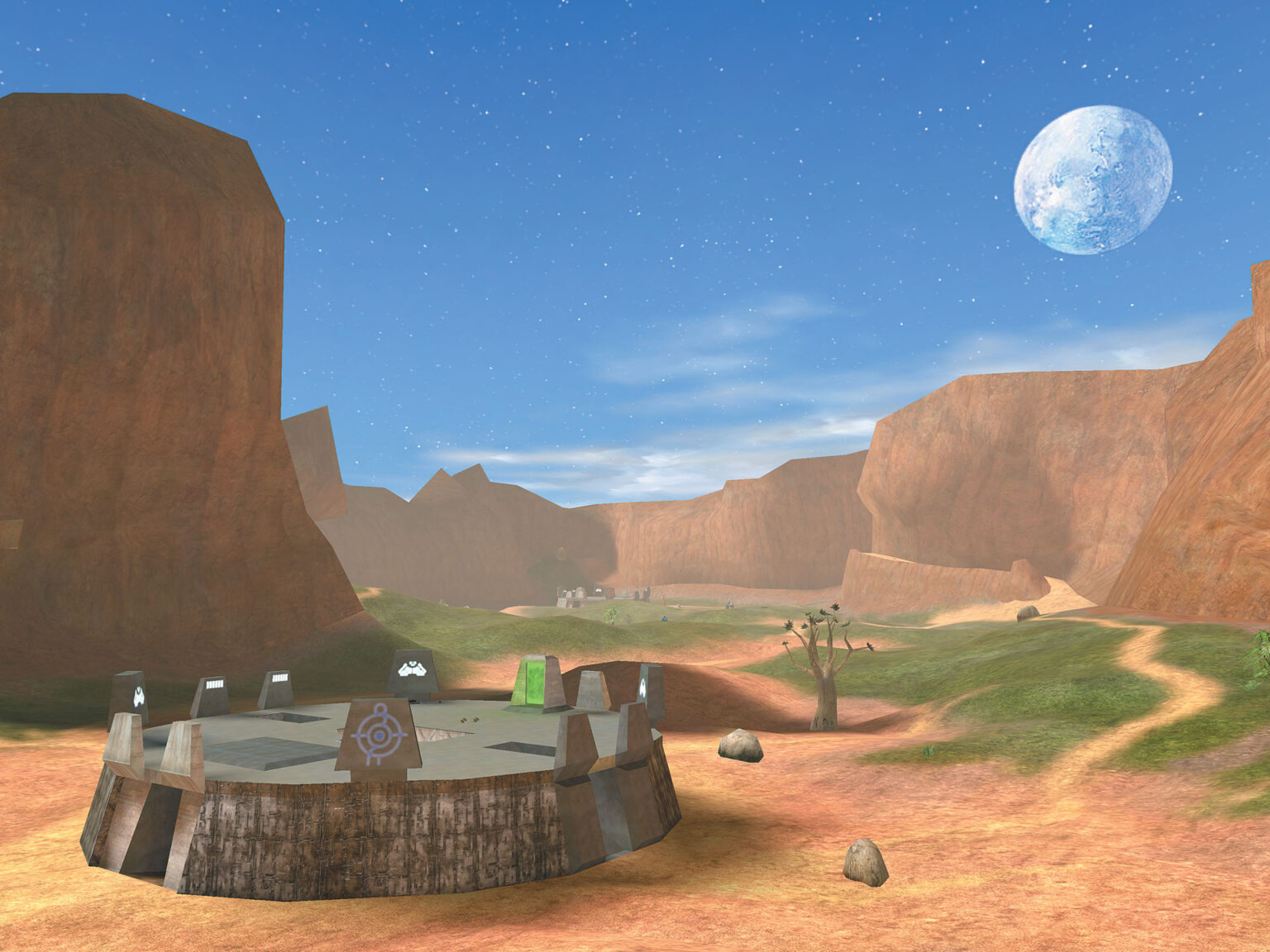
Blood Gulch, the Halo: Combat Evolved map that ate a lot of people’s weekends. Image: Xbox
Do the maths on that and you get the original console LAN party. Sixteen players at four per console means at least four Xboxes, four TVs and a lot of cable. In 2001 those TVs were heavy CRTs, so someone’s car boot was full and someone’s back was sore. Halo Waypoint, the official Halo site, summed up the era perfectly when it talked about “lugging your chunky CRT television and Xbox around the corner” to a friend’s place.
It’s hard to explain to anyone who started with online matchmaking how good this was. Everyone was in the same house. You could hear the yell from the next room when a plasma grenade stuck. Split screen meant screen-watching arguments were part of the deal, and you learned very quickly which mate would always go for the rocket launcher. By 2004, Microsoft was boasting that Halo had built a devoted following of players who took part in tournaments, competitions and game nights.
I’d argue this is where the console LAN party really started. PC players already had their own LAN scene, but Halo gave console players a game that genuinely needed the whole crew in one place. On the original Xbox, a full 16-player game of Halo only happened in a room full of consoles. Even Halo’s PC release in 2003 was billed as the first time anyone could play it online.
2002 to 2004: Xbox Live, then Halo 2
Xbox Live launched in the US and Canada on 15 November 2002, Xbox’s first birthday. The starter kit cost US$49.99 and came with a year’s subscription and the Xbox Communicator headset, and the service brought Gamertags, friends lists and voice chat to its games. Xbox general manager J Allard declared that the days of “sitting alone silently playing video games in the living room” were over. Halo players could’ve told him they’d never been alone in the first place.
Halo 2 is where online really clicked. It launched on 9 November 2004, on the same day in Australia and New Zealand as in the US, with launch celebrations in cities including Sydney, and it was rated MA15+ here like the first game. Microsoft said it made US$125 million in its first 24 hours, and by November 2006 it had racked up more than four billion online matches.
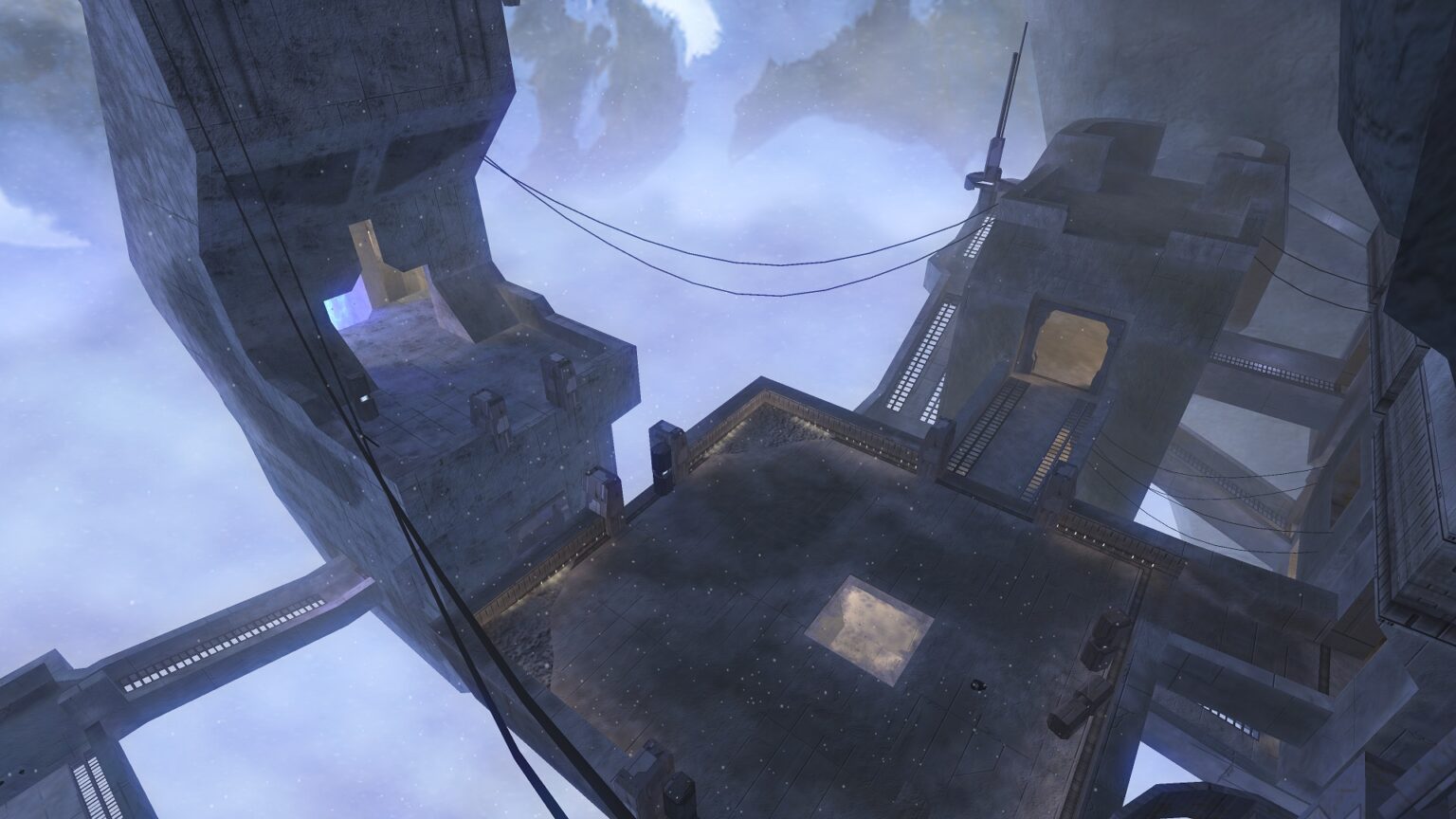
Lockout, one of Halo 2’s multiplayer maps. Image: Xbox
LAN parties didn’t stop, either. When Halo Waypoint marked Halo 2’s 20th birthday in 2024, the stories it shared were full of System Link games, LAN parties and all-nighters.
2007: Halo 3 finishes the fight
Halo 3 arrived on Xbox 360 in September 2007, and Microsoft said it made US$170 million in the US in its first 24 hours and more than US$300 million worldwide in its first week. It brought four-player co-op over Xbox Live, Saved Films for recording your best moments, and Forge, a map editor. In its first week, 2.7 million people played it on Xbox Live.
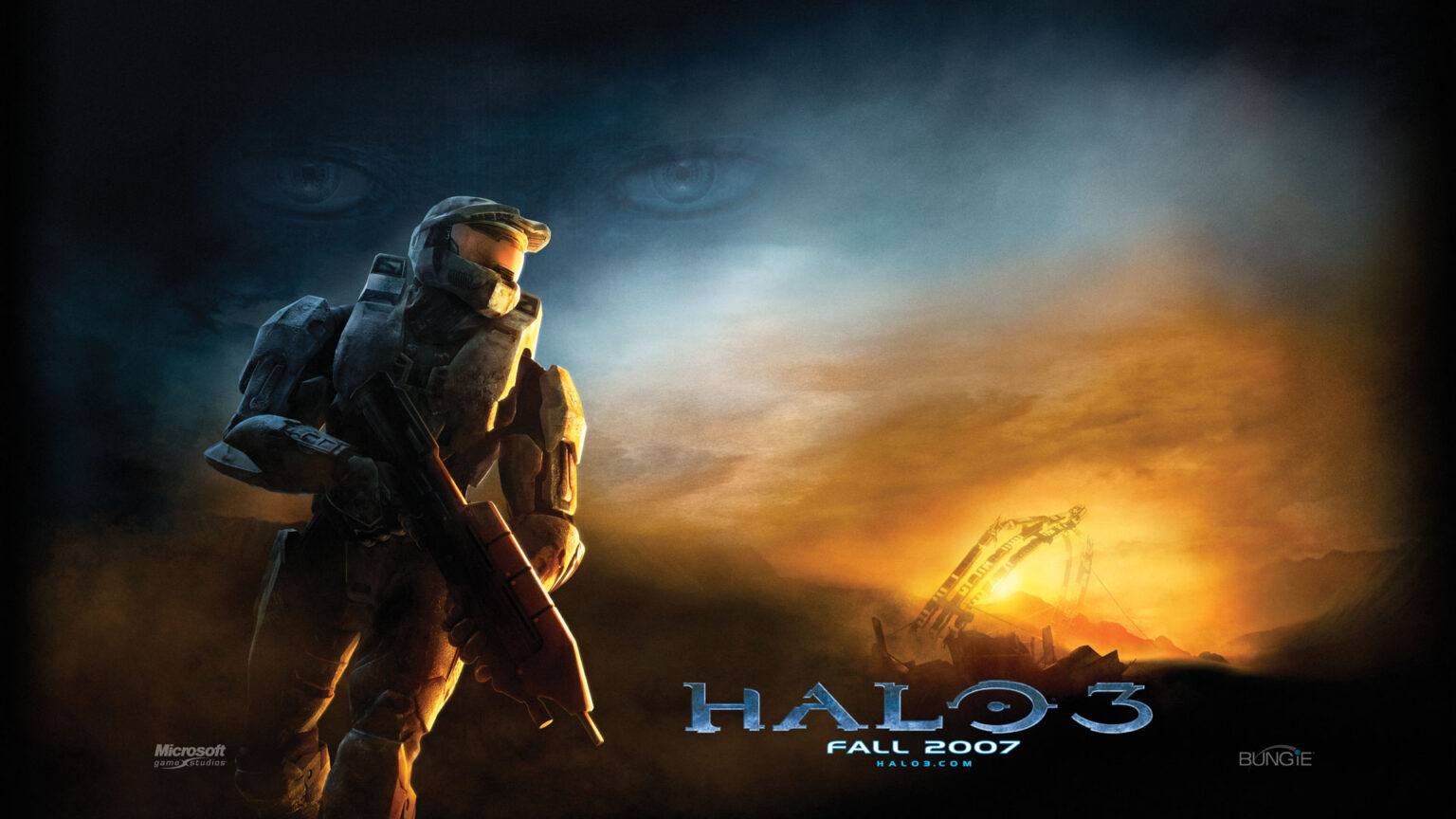
Halo 3’s original key art. Image: Xbox
Fun bit of Australian trivia: Halo 3 was rated M here, for moderate science fiction violence, a step down from the MA15+ on the first two games.
The Master Chief Collection, and LAN comes back
Halo: The Master Chief Collection arrived on Xbox One in November 2014, gathering the Master Chief’s story into one package. In 2018, an update added offline LAN on Xbox, along with 4K support on Xbox One X, which felt like Halo remembering where it came from. Halo: Reach was added on both PC and Xbox One on 3 December 2019, and Xbox says MCC was the top-selling game on Steam in its launch week.
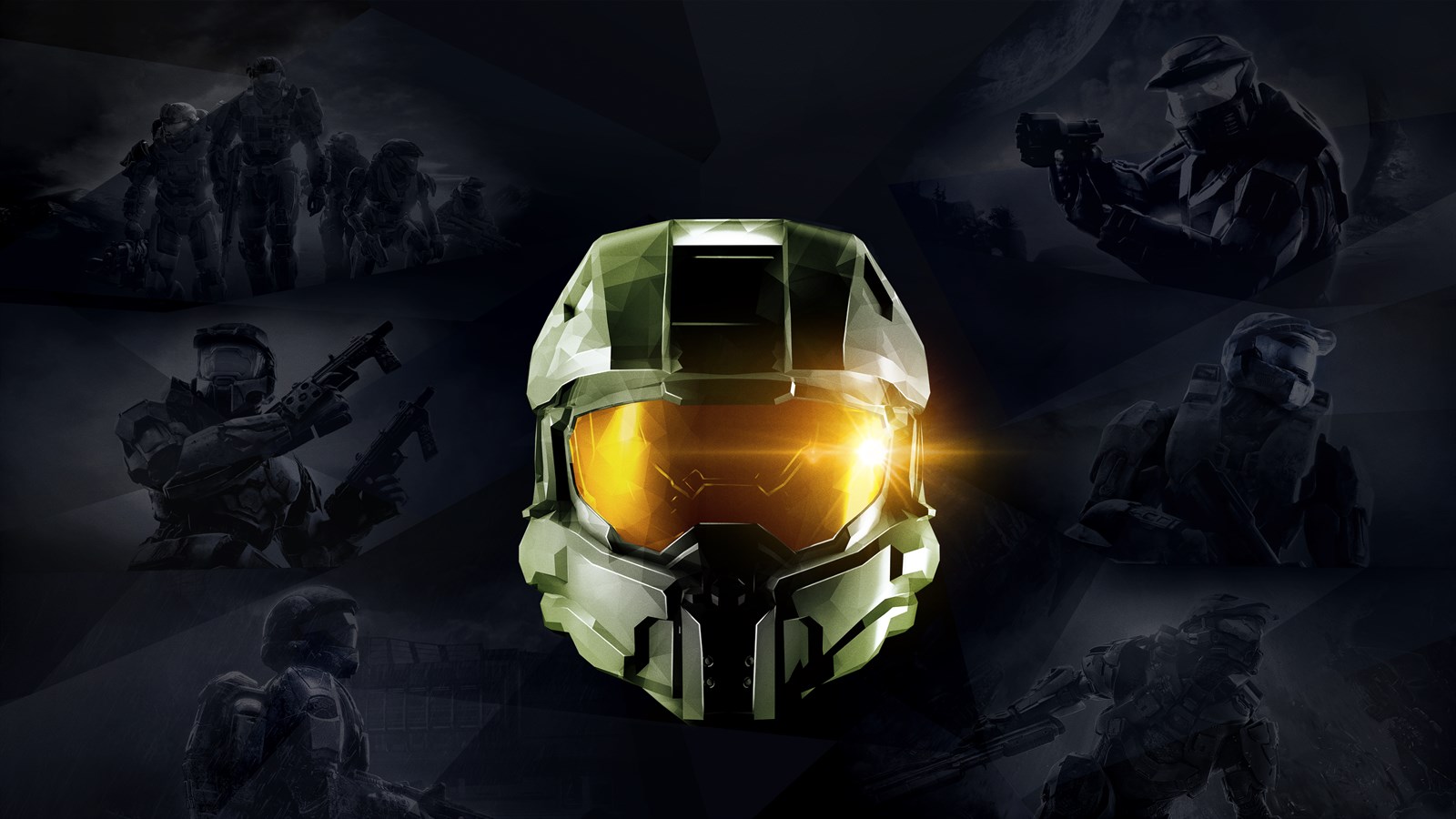
Halo: The Master Chief Collection. Image: Xbox
Today it has six games: Halo: Reach, Halo: Combat Evolved Anniversary, Halo 2: Anniversary, Halo 3, Halo 3: ODST and Halo 4. It’s rated MA15+ here and costs $59.95 on both the Australian Xbox Store and Steam, and it’s part of the curated Game Pass collections Xbox is running for its 25th anniversary.
Halo Infinite and Halo Studios
To mark 20 years of Xbox and Halo on 15 November 2021, 343 Industries released Halo Infinite’s free-to-play multiplayer three weeks early, as a beta, on Xbox Series X|S, Xbox One and PC. The campaign followed on 8 December. Xbox talked up the game’s PC features at the time, and PC LAN support was on the list, which is music to the ears of anyone who runs a LAN.
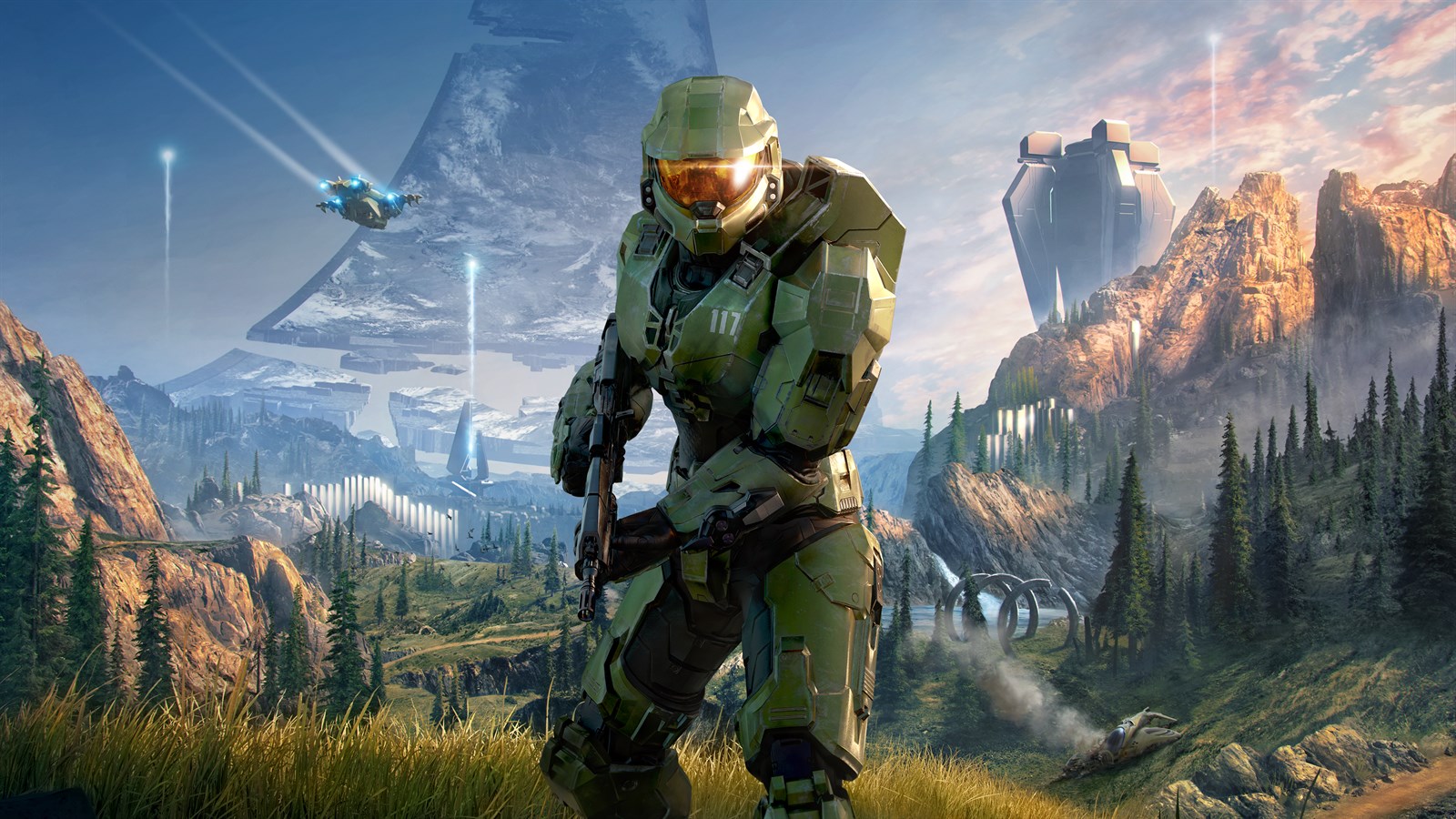
Halo Infinite. Image: Xbox
Infinite is still running, and if you log in at any point in 2026 you’ll unlock a free customisation bundle celebrating 25 years of Halo.
The bigger change came on 6 October 2024, when 343 Industries became Halo Studios and said the future of Halo was being built in Unreal Engine 5. Studio head Pierre Hintze described the series as two chapters so far, Bungie’s and 343’s, and said a new one was starting. The glimpse the studio showed that day was Project Foundry, which it described as neither a game nor a tech demo.
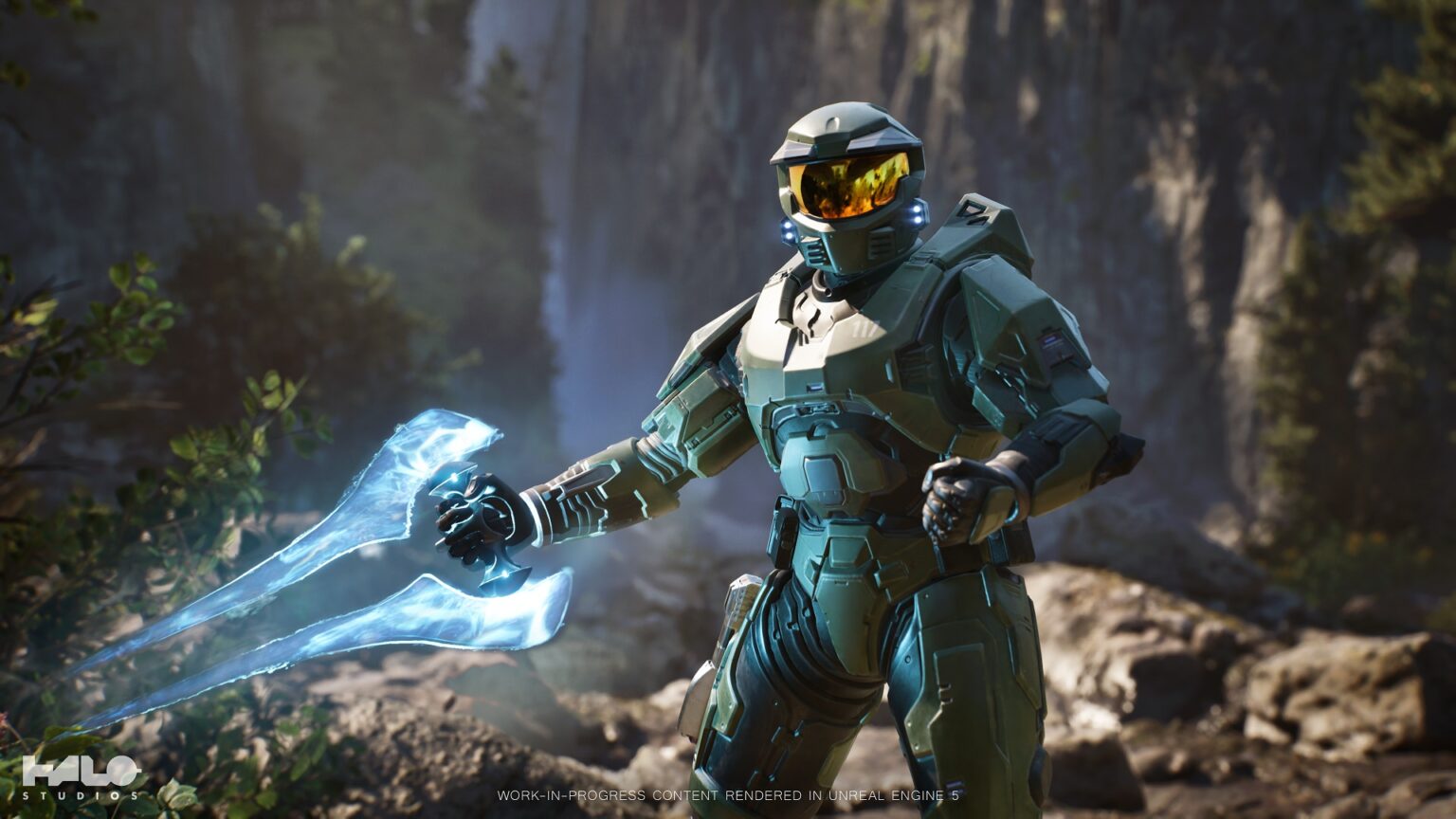
The Master Chief in Project Foundry, Halo Studios’ early Unreal Engine 5 work. Image: Halo Studios
2026: back to where it started
Halo Studios’ next game went straight back to the beginning. Halo: Campaign Evolved, announced on 24 October 2025, the weekend of the Halo World Championship, is a ground-up remake of Halo: Combat Evolved’s campaign in Unreal Engine 5. It launched on 28 July 2026, US time, on Xbox Series X|S, PC (through Xbox on PC and Steam) and PlayStation 5, and it was on Game Pass Ultimate and PC Game Pass from day one.
On top of the original ten missions, there are three new ones, called Operation: METEORITE, set a year before the first game and starring the Master Chief and Sergeant Johnson. There are nine extra weapons from across the Halo series, more Skulls than any Halo campaign before it, and four-player online co-op with cross-play between Xbox, PC and PS5, which Halo Studios says is a first in Halo history.
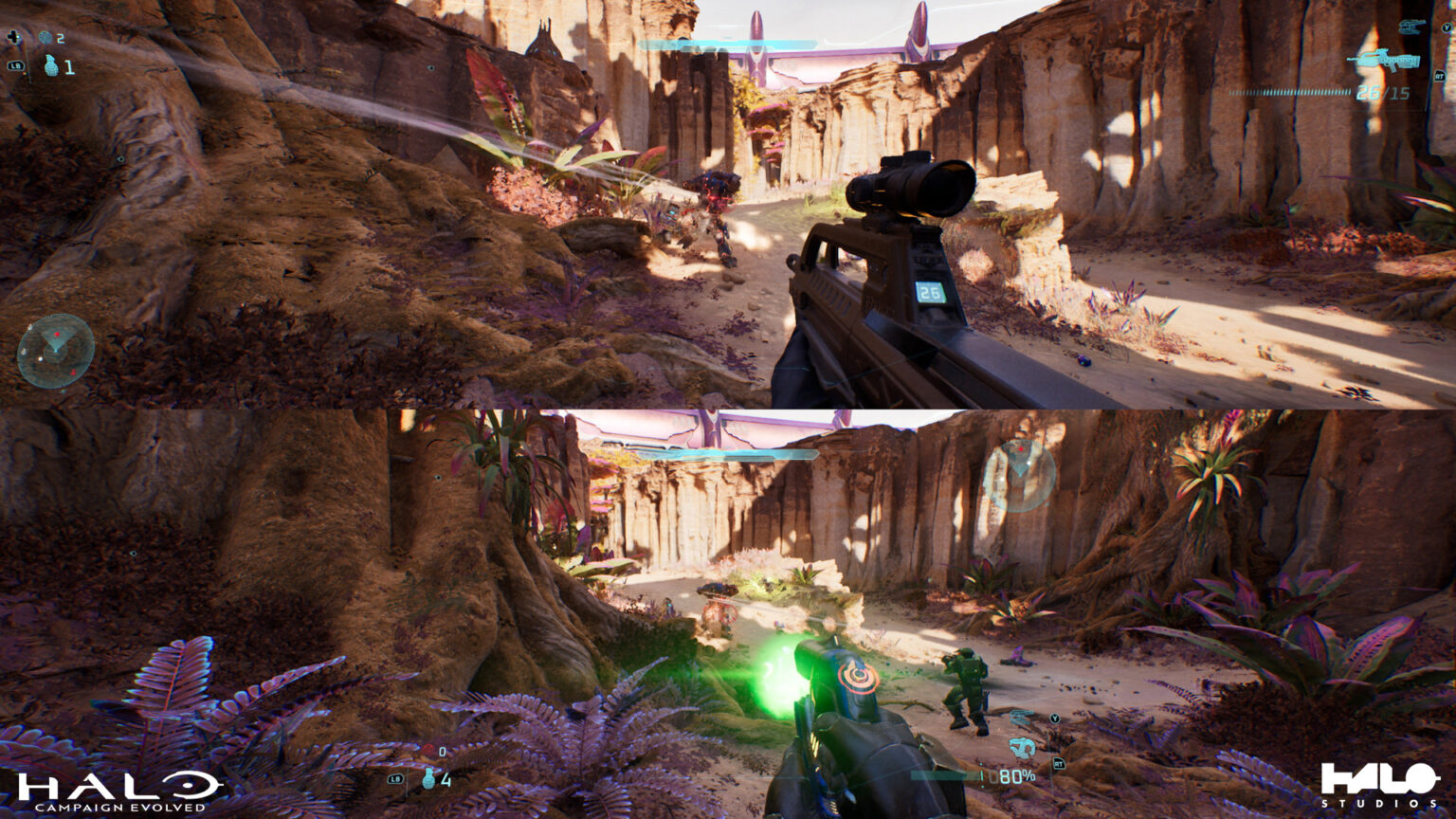
Two-player split screen in Halo: Campaign Evolved. Image: Halo Studios
For LAN people, the best bit is the two-player split screen on Xbox Series X|S and PS5. As the name says, it’s the campaign that’s been remade, so the multiplayer Halo Studios has talked about is co-op rather than 16-player Slayer. Still, two people on one couch working through The Silent Cartographer is about as 2001 as it gets. It’s $89.95 on the Australian Xbox Store right now, or $119.95 for the Premium Edition, and it’s rated MA15+.
Happy 25th, Xbox and Halo
There’s plenty planned for the birthday itself. Xbox’s Series X25 Limited Edition, a translucent green Series X inspired by the original console, launches on 13 November with a matching controller and a full copy of Halo: Campaign Evolved. It’s US$899.99 in the US, Xbox says pricing varies by market, and it’s only coming to select markets, though it does appear on Xbox’s Australian site. Anyone who signs in to Xbox before the end of 2026 gets a 25th anniversary profile badge, and Xbox’s new merch store even launched with a collection called Blood Gulch.

The Xbox Series X25 Limited Edition, made for the 25th anniversary. Image: Xbox
On the Halo side, Campaign Evolved players get free Silver Anniversary armour and assault rifle styles, and Halo Fest takes over Seattle in December with an orchestral concert on 11 December and two days at the Seattle Convention Center. Tickets have already sold out, so most of us will be celebrating from home.
That suits me fine, because for my money Halo has always been best in a room. Not alone, and not across the internet, but with a few mates, more TVs than is sensible and someone yelling about screen-watching. Back in 2021, 343 Industries’ own thank-you note for Halo’s 20th birthday listed staying up all night at LANs among the things the community had done together. Twenty-five years on, getting everyone into the same room is still the whole point of a LAN party.
Happy birthday, Xbox. Happy birthday, Master Chief. See you at the next LAN.
Halo: Campaign Evolved (Xbox Series X|S and PC)
Xbox Series X|S / PC
- Digital, on the Australian Xbox Store. Also on Game Pass Ultimate and PC Game Pass.
Halo: Campaign Evolved (PS5)
PS5
- PS5, standard edition on disc. Also on Xbox Series X|S and PC.
Halo: The Master Chief Collection
Xbox Series X|S / Xbox One / PC
- Six Halo games, including Halo: Combat Evolved Anniversary, Halo 2: Anniversary and Halo 3. Xbox and PC.